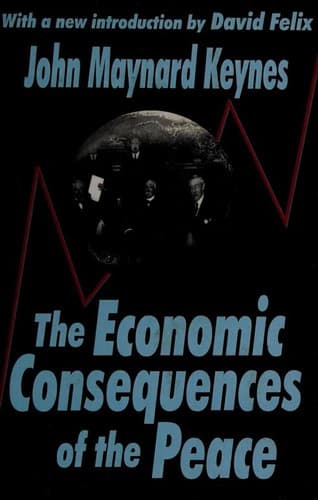
The Economic Consequences of the PeaceKeynes, John Maynard
History
The Economic Consequences of the Peace
Keynes, John Maynard
Economic history -- 1918-1945; Treaty of Versailles (1919 June 28); World War, 1914-1918 -- Economic aspects
The chief objections to all the varieties of this species of project
are, I suppose, the following. The United States is disinclined to
entangle herself further (after recent experiences) in the affairs of
Europe, and, anyhow, has for the time being no more capital to spare for
export on a large scale. There is no guarantee that Europe will put
financial assistance to proper use, or that she will not squander it and
be in just as bad case two or three years hence as she is in now;--M.
Klotz will use the money to put off the day of taxation a little longer,
Italy and Jugo-Slavia will fight one another on the proceeds, Poland
will devote it to fulfilling towards all her neighbors the military rÙle
which France has designed for her, the governing classes of Roumania
will divide up the booty amongst themselves. In short, America would
have postponed her own capital developments and raised her own cost of
living in order that Europe might continue for another year or two the
practices, the policy, and the men of the past nine months. And as for
assistance to Germany, is it reasonable or at all tolerable that the
European Allies, having stripped Germany of her last vestige of working
capital, in opposition to the arguments and appeals of the American
financial representatives at Paris, should then turn to the United
States for funds to rehabilitate the victim in sufficient measure to
allow the spoliation to recommence in a year or two?
There is no answer to these objections as matters are now. If I had
influence at the United States Treasury, I would not lend a penny to a
single one of the present Governments of Europe. They are not to be
trusted with resources which they would devote to the furtherance of
policies in repugnance to which, in spite of the President's failure to
assert either the might or the ideals of the people of the United
States, the Republican and the Democratic parties are probably united.
But if, as we must pray they will, the souls of the European peoples
turn away this winter from the false idols which have survived the war
that created them, and substitute in their hearts for the hatred and the
nationalism, which now possess them, thoughts and hopes of the happiness
and solidarity of the European family,--then should natural piety and
filial love impel the American people to put on one side all the smaller
objections of private advantage and to complete the work, that they
began in saving Europe from the tyranny of organized force, by saving
her from herself. And even if the conversion is not fully accomplished,
and some parties only in each of the European countries have espoused a
policy of reconciliation, America can still point the way and hold up
the hands of the party of peace by having a plan and a condition on
which she will give her aid to the work of renewing life.
Public-domain text, read in full here on John Shaqi.
Reviews
Reviews
No reviews yet
Be the first to share your thoughts on this work.
Elsewhere in the archive
Join the Discussion
Join the discussion
Sign in to leave a comment or review.
Sign InorCreate an account