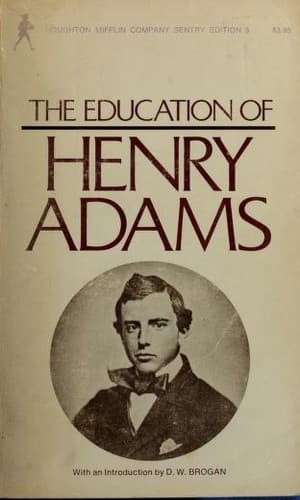
Adams, Henry, 1838-1918; Historians -- United States -- Biography
Russell's reply to this note of September 5 reached the
Legation on September 8, announcing at last to the anxious secretaries
that "instructions have been issued which will prevent the departure of
the two ironclad vessels from Liverpool." The members of the modest
Legation in Portland Place accepted it as Grant had accepted the
capitulation of Vicksburg. The private secretary conceived that, as
Secretary Stanton had struck and crushed by superior weight the rebel
left on the Mississippi, so Secretary Seward had struck and crushed the
rebel right in England, and he never felt a doubt as to the nature of
the battle. Though Minister Adams should stay in office till he were
ninety, he would never fight another campaign of life and death like
this; and though the private secretary should covet and attain every
office in the gift of President or people, he would never again find
education to compare with the life-and-death alternative of this
two-year-and-a-half struggle in London, as it had racked and
thumb-screwed him in its shifting phases; but its practical value as
education turned on his correctness of judgment in measuring the men
and their forces. He felt respect for Russell as for Palmerston because
they represented traditional England and an English policy, respectable
enough in itself, but which, for four generations, every Adams had
fought and exploited as the chief source of his political fortunes. As
he understood it, Russell had followed this policy steadily, ably, even
vigorously, and had brought it to the moment of execution. Then he had
met wills stronger than his own, and, after persevering to the last
possible instant, had been beaten. Lord North and George Canning had a
like experience. This was only the idea of a boy, but, as far as he
ever knew, it was also the idea of his Government. For once, the
volunteer secretary was satisfied with his Government. Commonly the
self-respect of a secretary, private or public, depends on, and is
proportional to, the severity of his criticism, but in this case the
English campaign seemed to him as creditable to the State Department as
the Vicksburg campaign to the War Department, and more decisive. It was
well planned, well prepared, and well executed. He could never discover
a mistake in it. Possibly he was biassed by personal interest, but his
chief reason for trusting his own judgment was that he thought himself
to be one of only half a dozen persons who knew something about it.
When others criticised Mr. Seward, he was rather indifferent to their
opinions because he thought they hardly knew what they were talking
about, and could not be taught without living over again the London
life of 1862. To him Secretary Seward seemed immensely strong and
steady in leadership; but this was no discredit to Russell or
Palmerston or Gladstone. They, too, had shown power, patience and
steadiness of purpose. They had persisted for two years and a half in
Public-domain text, read in full here on John Shaqi.
Reviews
Reviews
No reviews yet
Be the first to share your thoughts on this work.
Elsewhere in the archive
Join the Discussion
Join the discussion
Sign in to leave a comment or review.
Sign InorCreate an account