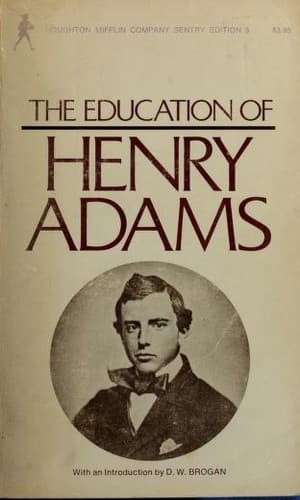
Adams, Henry, 1838-1918; Historians -- United States -- Biography
This Anglo-American form of diplomacy was chiefly undiplomatic,
and had the peculiar effect of teaching a habit of diplomacy useless or
mischievous everywhere but in London. Nowhere else in the world could
one expect to figure in a role so unprofessional. The young man knew no
longer what character he bore. Private secretary in the morning, son in
the afternoon, young man about town in the evening, the only character
he never bore was that of diplomatist, except when he wanted a card to
some great function. His diplomatic education was at an end; he seldom
met a diplomat, and never had business with one; he could be of no use
to them, or they to him; but he drifted inevitably into society, and,
do what he might, his next education must be one of English social
life. Tossed between the horns of successive dilemmas, he reached his
twenty-sixth birthday without the power of earning five dollars in any
occupation. His friends in the army were almost as badly off, but even
army life ruined a young man less fatally than London society. Had he
been rich, this form of ruin would have mattered nothing; but the young
men of 1865 were none of them rich; all had to earn a living; yet they
had reached high positions of responsibility and power in camps and
Courts, without a dollar of their own and with no tenure of office.
Henry Adams had failed to acquire any useful education; he
should at least have acquired social experience. Curiously enough, he
failed here also. From the European or English point of view, he had no
social experience, and never got it. Minister Adams happened on a
political interregnum owing to Lord Palmerston's personal influence
from 1860 to 1865; but this political interregnum was less marked than
the social still-stand during the same years. The Prince Consort was
dead; the Queen had retired; the Prince of Wales was still a boy. In
its best days, Victorian society had never been "smart." During the
forties, under the influence of Louis Philippe, Courts affected to be
simple, serious and middle class; and they succeeded. The taste of
Louis Philippe was bourgeois beyond any taste except that of Queen
Victoria. Style lingered in the background with the powdered footman
behind the yellow chariot, but speaking socially the Queen had no style
save what she inherited. Balmoral was a startling revelation of royal
taste. Nothing could be worse than the toilettes at Court unless it
were the way they were worn. One's eyes might be dazzled by jewels, but
they were heirlooms, and if any lady appeared well dressed, she was
either a foreigner or "fast." Fashion was not fashionable in London
until the Americans and the Jews were let loose. The style of London
toilette universal in 1864 was grotesque, like Monckton Milnes on
horseback in Rotten Row.
Public-domain text, read in full here on John Shaqi.
Reviews
Reviews
No reviews yet
Be the first to share your thoughts on this work.
Elsewhere in the archive
Join the Discussion
Join the discussion
Sign in to leave a comment or review.
Sign InorCreate an account