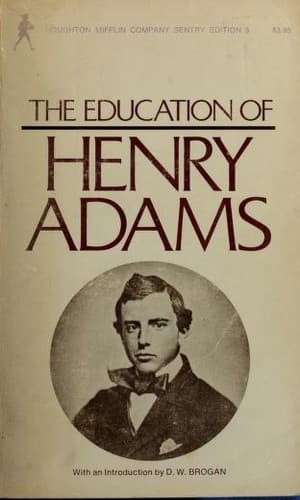
Adams, Henry, 1838-1918; Historians -- United States -- Biography
To him, the banking mind was
obnoxious; and this antipathy caused him the more surprise at finding
McCulloch the broadest, most liberal, most genial, and most practical
public man in Washington.
There could be no doubt of it. The burden of the Treasury at
that time was very great. The whole financial system was in chaos;
every part of it required reform; the utmost experience, tact, and
skill could not make the machine work smoothly. No one knew how well
McCulloch did it until his successor took it in charge, and tried to
correct his methods. Adams did not know enough to appreciate
McCulloch's technical skill, but he was struck at his open and generous
treatment of young men. Of all rare qualities, this was, in Adams's
experience, the rarest. As a rule, officials dread interference. The
strongest often resent it most. Any official who admits equality in
discussion of his official course, feels it to be an act of virtue;
after a few months or years he tires of the effort. Every friend in
power is a friend lost. This rule is so nearly absolute that it may be
taken in practice as admitting no exception. Apparent exceptions exist,
and McCulloch was one of them.
McCulloch had been spared the gluttonous selfishness and
infantile jealousy which are the commoner results of early political
education. He had neither past nor future, and could afford to be
careless of his company. Adams found him surrounded by all the active
and intelligent young men in the country. Full of faith, greedy for
work, eager for reform, energetic, confident, capable, quick of study,
charmed with a fight, equally ready to defend or attack, they were
unselfish, and even--as young men went--honest. They came mostly from
the army, with the spirit of the volunteers. Frank Walker, Frank
Barlow, Frank Bartlett were types of the generation. Most of the press,
and much of the public, especially in the West, shared their ideas. No
one denied the need for reform. The whole government, from top to
bottom, was rotten with the senility of what was antiquated and the
instability of what was improvised. The currency was only one example;
the tariff was another; but the whole fabric required reconstruction as
much as in 1789, for the Constitution had become as antiquated as the
Confederation. Sooner or later a shock must come, the more dangerous
the longer postponed. The Civil War had made a new system in fact; the
country would have to reorganize the machinery in practice and theory.
One might discuss indefinitely the question which branch of
government needed reform most urgently; all needed it enough, but no
one denied that the finances were a scandal, and a constant, universal
nuisance. The tariff was worse, though more interests upheld it.
McCulloch had the singular merit of facing reform with large
good-nature and willing sympathy--outside of parties, jobs, bargains,
corporations or intrigues--which Adams never was to meet again.
Public-domain text, read in full here on John Shaqi.
Reviews
Reviews
No reviews yet
Be the first to share your thoughts on this work.
Elsewhere in the archive
Join the Discussion
Join the discussion
Sign in to leave a comment or review.
Sign InorCreate an account