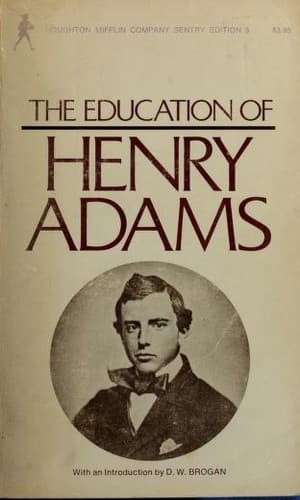
Adams, Henry, 1838-1918; Historians -- United States -- Biography
great pleasure or pain in the sum of life to a newspaper correspondent,
but it served as a subject for letters, and the Chief Justice was very
willing to win an ally in the press who would tell his story as he
wished it to be read. The intimacy in Mr. Chase's house grew rapidly,
and the alliance was no small help to the comforts of a struggling
newspaper adventurer in Washington. No matter what one might think of
his politics or temper, Mr. Chase was a dramatic figure, of high
senatorial rank, if also of certain senatorial faults; a valuable ally.
As was sure, sooner or later, to happen, Adams one day met
Charles Sumner on the street, and instantly stopped to greet him. As
though eight years of broken ties were the natural course of
friendship, Sumner at once, after an exclamation of surprise, dropped
back into the relation of hero to the school boy. Adams enjoyed
accepting it. He was then thirty years old and Sumner was fifty-seven;
he had seen more of the world than Sumner ever dreamed of, and he felt
a sort of amused curiosity to be treated once more as a child. At best,
the renewal of broken relations is a nervous matter, and in this case
it bristled with thorns, for Sumner's quarrel with Mr. Adams had not
been the most delicate of his ruptured relations, and he was liable to
be sensitive in many ways that even Bostonians could hardly keep in
constant mind; yet it interested and fascinated Henry Adams as a new
study of political humanity. The younger man knew that the meeting
would have to come, and was ready for it, if only as a newspaper need;
but to Sumner it came as a surprise and a disagreeable one, as Adams
conceived. He learned something--a piece of practical education worth
the effort--by watching Sumner's behavior. He could see that many
thoughts--mostly unpleasant--were passing through his mind, since he
made no inquiry about any of Adams's family, or allusion to any of his
friends or his residence abroad. He talked only of the present. To him,
Adams in Washington should have seemed more or less of a critic,
perhaps a spy, certainly an intriguer or adventurer, like scores of
others; a politician without party; a writer without principles; an
office-seeker certain to beg for support. All this was, for his
purposes, true. Adams could do him no good, and would be likely to do
him all the harm in his power. Adams accepted it all; expected to be
kept at arm's length; admitted that the reasons were just. He was the
more surprised to see that Sumner invited a renewal of old relations.
He found himself treated almost confidentially. Not only was he asked
to make a fourth at Sumner's pleasant little dinners in the house on La
Fayette Square, but he found himself admitted to the Senator's study
and informed of his views, policy and purposes, which were sometimes
even more astounding than his curious gaps or lapses of omniscience.
Public-domain text, read in full here on John Shaqi.
Reviews
Reviews
No reviews yet
Be the first to share your thoughts on this work.
Elsewhere in the archive
Join the Discussion
Join the discussion
Sign in to leave a comment or review.
Sign InorCreate an account