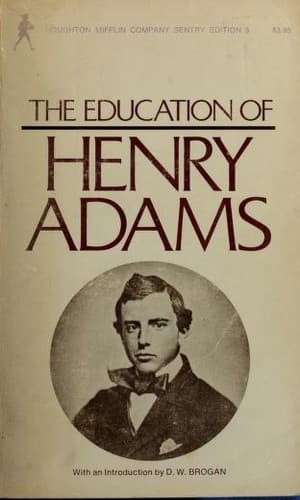
Adams, Henry, 1838-1918; Historians -- United States -- Biography
Yet consideration had value, and at that time Adams enjoyed
lecturing Augustus St. Gaudens, in hours of depression, on its
economics: "Honestly you must admit that even if you don't pay your
expenses you get a certain amount of advantage from doing the best
work. Very likely some of the really successful Americans would be
willing you should come to dinner sometimes, if you did not come too
often, while they would think twice about Hay, and would never stand
me." The forgotten statesman had no value at all; the general and
admiral not much; the historian but little; on the whole, the artist
stood best, and of course, wealth rested outside the question, since it
was acting as judge; but, in the last resort, the judge certainly
admitted that consideration had some value as an asset, though hardly
as much as ten--or five--thousand a year.
Hay and Adams had the advantage of looking out of their windows
on the antiquities of La Fayette Square, with the sense of having all
that any one had; all that the world had to offer; all that they wanted
in life, including their names on scores of title-pages and in one or
two biographical dictionaries; but this had nothing to do with
consideration, and they knew no more than Boutwell or St. Gaudens
whether to call it success. Hay had passed ten years in writing the
"Life" of Lincoln, and perhaps President Lincoln was the better for it,
but what Hay got from it was not so easy to see, except the privilege
of seeing popular book-makers steal from his book and cover the theft
by abusing the author. Adams had given ten or a dozen years to
Jefferson and Madison, with expenses which, in any mercantile business,
could hardly have been reckoned at less than a hundred thousand
dollars, on a salary of five thousand a year; and when he asked what
return he got from this expenditure, rather more extravagant in
proportion to his means than a racing-stable, he could see none
whatever. Such works never return money. Even Frank Parkman never
printed a first edition of his relatively cheap and popular volumes,
numbering more than seven hundred copies, until quite at the end of his
life. A thousand copies of a book that cost twenty dollars or more was
as much as any author could expect; two thousand copies was a visionary
estimate unless it were canvassed for subscription. As far as Adams
knew, he had but three serious readers--Abram Hewitt, Wayne McVeagh,
and Hay himself. He was amply satisfied with their consideration, and
could dispense with that of the other fifty-nine million, nine hundred
and ninety-nine thousand, nine hundred and ninety-seven; but neither he
nor Hay was better off in any other respect, and their chief title to
consideration was their right to look out of their windows on great
men, alive or dead, in La Fayette Square, a privilege which had nothing
to do with their writings.
Public-domain text, read in full here on John Shaqi.
Reviews
Reviews
No reviews yet
Be the first to share your thoughts on this work.
Elsewhere in the archive
Join the Discussion
Join the discussion
Sign in to leave a comment or review.
Sign InorCreate an account