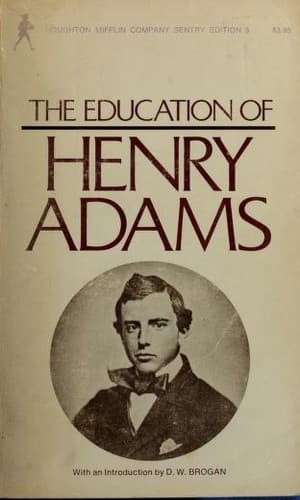
Adams, Henry, 1838-1918; Historians -- United States -- Biography
For the rest, Italy was mostly an emotion and the emotion
naturally centred in Rome. The American parent, curiously enough, while
bitterly hostile to Paris, seemed rather disposed to accept Rome as
legitimate education, though abused; but to young men seeking education
in a serious spirit, taking for granted that everything had a cause,
and that nature tended to an end, Rome was altogether the most violent
vice in the world, and Rome before 1870 was seductive beyond
resistance. The month of May, 1860, was divine. No doubt other young
men, and occasionally young women, have passed the month of May in Rome
since then, and conceive that the charm continues to exist. Possibly it
does--in them--but in 1860 the lights and shadows were still mediaeval,
and mediaeval Rome was alive; the shadows breathed and glowed, full of
soft forms felt by lost senses. No sand-blast of science had yet
skinned off the epidermis of history, thought, and feeling. The
pictures were uncleaned, the churches unrestored, the ruins
unexcavated. Mediaeval Rome was sorcery. Rome was the worst spot on
earth to teach nineteenth-century youth what to do with a
twentieth-century world. One's emotions in Rome were one's private
affair, like one's glass of absinthe before dinner in the Palais Royal;
they must be hurtful, else they could not have been so intense; and
they were surely immoral, for no one, priest or politician, could
honestly read in the ruins of Rome any other certain lesson than that
they were evidence of the just judgments of an outraged God against all
the doings of man. This moral unfitted young men for every sort of
useful activity; it made Rome a gospel of anarchy and vice; the last
place under the sun for educating the young; yet it was, by common
consent, the only spot that the young--of either sex and every
race--passionately, perversely, wickedly loved.
Public-domain text, read in full here on John Shaqi.
Reviews
Reviews
No reviews yet
Be the first to share your thoughts on this work.
Elsewhere in the archive
Join the Discussion
Join the discussion
Sign in to leave a comment or review.
Sign InorCreate an account