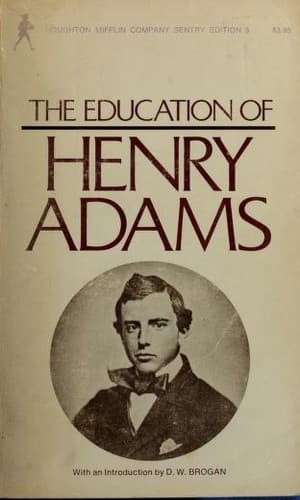
Adams, Henry, 1838-1918; Historians -- United States -- Biography
and quite eccentric--he had some means, unknown to other Senators, of
producing the effect of unselfishness.
Superficially Mr. Seward and Mr. Adams were contrasts;
essentially they were much alike. Mr. Adams was taken to be rigid, but
the Puritan character in all its forms could be supple enough when it
chose; and in Massachusetts all the Adamses had been attacked in
succession as no better than political mercenaries. Mr. Hildreth, in
his standard history, went so far as to echo with approval the charge
that treachery was hereditary in the family. Any Adams had at least to
be thick-skinned, hardened to every contradictory epithet that virtue
could supply, and, on the whole, armed to return such attentions; but
all must have admitted that they had invariably subordinated local to
national interests, and would continue to do so, whenever forced to
choose. C. F. Adams was sure to do what his father had done, as his
father had followed the steps of John Adams, and no doubt thereby
earned his epithets.
The inevitable followed, as a child fresh from the nursery
should have had the instinct to foresee, but the young man on the edge
of life never dreamed. What motives or emotions drove his masters on
their various paths he made no pretence of guessing; even at that age
he preferred to admit his dislike for guessing motives; he knew only
his own infantile ignorance, before which he stood amazed, and his
innocent good-faith, always matter of simple-minded surprise. Critics
who know ultimate truth will pronounce judgment on history; all that
Henry Adams ever saw in man was a reflection of his own ignorance, and
he never saw quite so much of it as in the winter of 1860-61. Every one
knows the story; every one draws what conclusion suits his temper, and
the conclusion matters now less than though it concerned the merits of
Adam and Eve in the Garden of Eden; but in 1861 the conclusion made the
sharpest lesson of life; it was condensed and concentrated education.
Rightly or wrongly the new President and his chief advisers in
Washington decided that, before they could administer the Government,
they must make sure of a government to administer, and that this chance
depended on the action of Virginia. The whole ascendancy of the winter
wavered between the effort of the cotton States to drag Virginia out,
and the effort of the new President to keep Virginia in. Governor
Seward representing the Administration in the Senate took the lead; Mr.
Adams took the lead in the House; and as far as a private secretary
knew, the party united on its tactics. In offering concessions to the
border States, they had to run the risk, or incur the certainty, of
dividing their own party, and they took this risk with open eyes. As
Seward himself, in his gruff way, said at dinner, after Mr. Adams and
he had made their speeches: "If there's no secession now, you and I are
ruined."
Public-domain text, read in full here on John Shaqi.
Reviews
Reviews
No reviews yet
Be the first to share your thoughts on this work.
Elsewhere in the archive
Join the Discussion
Join the discussion
Sign in to leave a comment or review.
Sign InorCreate an account