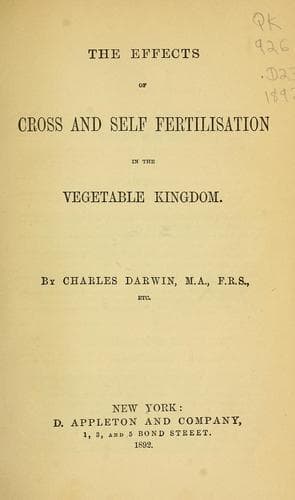
The Effects of Cross & Self-Fertilisation in the Vegetable KingdomDarwin, Charles
Science
The Effects of Cross & Self-Fertilisation in the Vegetable Kingdom
Darwin, Charles
Fertilization of plants; Plants -- Variation; Pollination
self-fertilised for nine generations continuously, or then once
intercrossed, namely in the last generation.
3. Brassica oleracea.
Some flowers on cabbage plants of the second self-fertilised generation
were crossed with pollen from a plant of the same variety brought from a
distant garden, and other flowers were again self-fertilised. Plants
derived from a cross with a fresh stock and plants of the third
self-fertilised generation were thus raised. The former were to the
self-fertilised in weight as 100 to 22; and this enormous difference
must be attributed in part to the beneficial effects of a cross with a
fresh stock, and in part to the deteriorating effects of
self-fertilisation continued during three generations.
4. Iberis umbellata.
Seedlings from a crimson English variety crossed by a pale-coloured
variety which had been grown for some generations in Algiers, were to
the self-fertilised seedlings from the crimson variety in height as 100
to 89, and as 100 to 75 in fertility. I am surprised that this cross
with another variety did not produce a still more strongly marked
beneficial effect; for some intercrossed plants of the crimson English
variety, put into competition with plants of the same variety
self-fertilised during three generations, were in height as 100 to 86,
and in fertility as 100 to 75. The slightly greater difference in height
in this latter case, may possibly be attributed to the deteriorating
effects of self-fertilisation carried on for two additional generations.
5. Eschscholtzia californica.
Public-domain text, read in full here on John Shaqi.
Reviews
Reviews
No reviews yet
Be the first to share your thoughts on this work.
Elsewhere in the archive
Join the Discussion
Join the discussion
Sign in to leave a comment or review.
Sign InorCreate an account