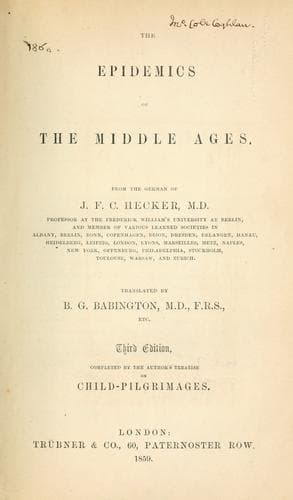
The Epidemics of the Middle AgesHecker, J. F. C. (Justus Friedrich Carl)
History
The Epidemics of the Middle Ages
Hecker, J. F. C. (Justus Friedrich Carl)
Black Death; Epidemics -- History; Hysteria, Epidemic
All these modes of relief, however, were as nothing in comparison with
the irresistible charms of musical sound. Attempts had indeed been
made in ancient times to mitigate the pain of sciatica[275], or the
paroxysms of mania[276], by the soft melody of the flute, and, what
is still more applicable to the present purpose, to remove the danger
arising from the bite of vipers[277] by the same means. This, however,
was tried only to a very small extent. But after being bitten by the
Tarantula, there was, according to popular opinion, no way of saving
life except by music, and it was hardly considered as an exception
to the general rule, that every now and then the bad effects of a
wound were prevented by placing a ligature on the bitten limb, or
by internal medicine, or that strong persons occasionally withstood
the effects of the poison, without the employment of any remedies at
all[278]. It was much more common, and is quite in accordance with the
nature of so exquisite a nervous disease, to hear accounts of many,
who, when bitten by the Tarantula, perished miserably because the
Tarantella, which would have afforded them deliverance, was not played
to them[279]. It was customary, therefore, so early as the commencement
of the seventeenth century, for whole bands of musicians to traverse
Italy during the summer months, and, what is quite unexampled either in
ancient or modern times, the cure of the _Tarantati_ in the different
towns and villages was undertaken on a grand scale. This season of
dancing and music was called “the women’s little carnival,”[280] for
it was women more especially who conducted the arrangements; so that
throughout the whole country they saved up their spare money, for the
purpose of rewarding the welcome musicians, and many of them neglected
their household employments to participate in this festival of the
sick. Mention is even made of one benevolent lady (Mita Lupa) who had
expended her whole fortune on this object[281].
Public-domain text, read in full here on John Shaqi.
Reviews
Reviews
No reviews yet
Be the first to share your thoughts on this work.
Elsewhere in the archive
Join the Discussion
Join the discussion
Sign in to leave a comment or review.
Sign InorCreate an account