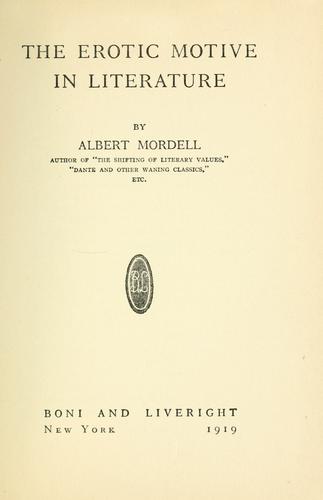
Erotic literature -- History and criticism; Psychoanalysis and literature; Sex in literature
The Keats of the first volume, _Poems_, 1817, is a much different
person from the Keats of the _Lamia_ volume, in 1820. The three
intervening years had brought a maddening love affair, a fatal disease
and the famous, though not as once thought fatal review, attacking
_Endymion_. His art principles remained much the same. With growing
sorrow he worshipped beauty more and sought in it a refuge from grief.
His attitude towards women and life was now somewhat different. He paid
woman a tribute in the poem in the first volume, beginning with the
lines, "Woman! I behold thee," etc. But he had not yet suffered from a
Fanny Brawne; here he spoke of woman's being "like a milk-white lamb
that bleats for man's protection." And yet before he was twenty he may
have had a foreboding that his fate in love might not be a happy one.
In the poem, _To Hope_, he wrote:
"Should e'er unhappy love my bosom pain,
From cruel parents or relentless fair;
O let me not think it is quite in vain
To sigh out sonnets to the midnight air."
Alas for himself, but perhaps (it may be cruel to say) fortunately for
the lovers of literature, those sonnets and other poems were sighed out
later!
Before we can, however, quite understand his sad life and the nature
of his work and philosophy, something must be said about his relations
to his mother. She died from consumption when he was past fourteen.
Keats, who was her favourite child, sat up nights, mourning her, and
was inconsolable; he would hide for days under his master's desk. Once,
at the age of five, he guarded her sick room with a sword. His mother
re-married a year after her husband's death, when the poet was in his
tenth year. She separated from her second husband and went to live with
her mother. Keats then had a guardian. The poet was the oldest of five
children, and was a seven months' child. All this is significant. The
Œdipus Complex was strong in the poet. He was not only deprived of his
mother early, but witnessed her marry a second time. This event revived
the babyish jealousy he felt of his father, and made him unconsciously
hate the new husband. He looked for a substitute for the lost mother
and thought he found her in Fanny Brawne, and then he learned what
grief was. He loved beauty so much because of unrequited love. Some
poets, like Wordsworth, seek consolation in nature for lack of love,
others like Byron simply voice their woe in a personal note, others
like Shelley find it a spur to spread views of reform in connection
with the marriage institution. Keats's love of beauty has a strong
sexual component. His unfulfilled physical desires were sublimated into
poems worshipping beauty. Art was his refuge.
Public-domain text, read in full here on John Shaqi.
Reviews
Reviews
No reviews yet
Be the first to share your thoughts on this work.
Elsewhere in the archive
Join the Discussion
Join the discussion
Sign in to leave a comment or review.
Sign InorCreate an account