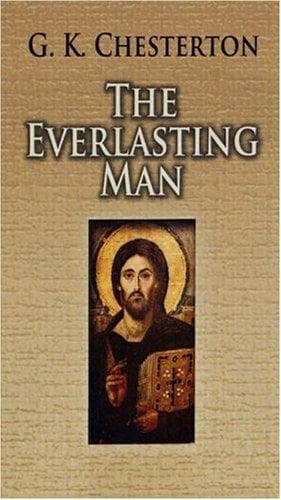
The Everlasting ManChesterton, G. K. (Gilbert Keith)
Religion
The Everlasting Man
Chesterton, G. K. (Gilbert Keith)
Catholic Church -- Apologetic works; Christianity and other religions; Religion
But the point here is that if we _could_ read the Gospel reports as
things as new as newspaper reports, they would puzzle us and perhaps
terrify us much _more_ than the same things as developed by historical
Christianity. For instance; Christ after a clear allusion to the eunuchs
of eastern courts, said there would be eunuchs of the kingdom of heaven.
If this does not mean the voluntary enthusiasm of virginity, it could
only be made to mean something much more unnatural or uncouth. It is the
historical religion that humanises it for us by experience of
Franciscans or of Sisters of Mercy. The mere statement standing by
itself might very well suggest a rather dehumanised atmosphere; the
sinister and inhuman silence of the Asiatic harem and divan. This is but
one instance out of scores; but the moral is that the Christ of the
Gospel might actually seem more strange and terrible than the Christ of
the Church.
I am dwelling on the dark or dazzling or defiant or mysterious side of
the Gospel words, not because they had not obviously a more obvious and
popular side, but because this is the answer to a common criticism on a
vital point. The freethinker frequently says that Jesus of Nazareth was
a man of his time, even if he was in advance of his time; and that we
cannot accept his ethics as final for humanity. The freethinker then
goes on to criticise his ethics, saying plausibly enough that men cannot
turn the other cheek, or that they must take thought for the morrow, or
that the self-denial is too ascetic or the monogamy too severe. But the
Zealots and the Legionaries did not turn the other cheek any more than
we do, if so much. The Jewish traders and Roman tax-gatherers took
thought for the morrow as much as we, if not more. We cannot pretend to
be abandoning the morality of the past for one more suited to the
present. It is certainly not the morality of another age, but it might
be of another world.
Public-domain text, read in full here on John Shaqi.
Reviews
Reviews
No reviews yet
Be the first to share your thoughts on this work.
Elsewhere in the archive
Join the Discussion
Join the discussion
Sign in to leave a comment or review.
Sign InorCreate an account