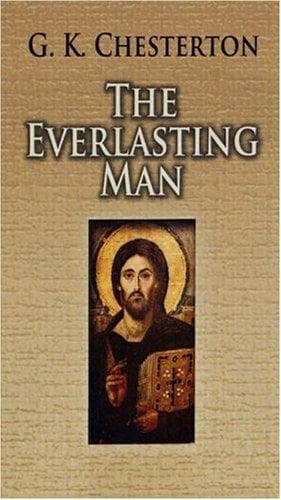
The Everlasting ManChesterton, G. K. (Gilbert Keith)
Religion
The Everlasting Man
Chesterton, G. K. (Gilbert Keith)
Catholic Church -- Apologetic works; Christianity and other religions; Religion
Now the most extraordinary thing about this is that it is all quite
true; it is true in every detail except that it happens to be attributed
entirely to the wrong person. It is not true of the Church; but it is
true of the heretics condemned by the Church. It is as if one were to
write a most detailed analysis of the mistakes and misgovernment of the
ministers of George the Third, merely with the small inaccuracy that the
whole story was told about George Washington; or as if somebody made a
list of the crimes of the Bolshevists with no variation except that they
were all attributed to the Czar. The early Church was indeed very
ascetic, in connection with a totally different philosophy; but the
philosophy of a war on life and nature as such really did exist in the
world, if the critics only knew where to look for it.
What really happened was this. When the Faith first emerged into the
world, the very first thing that happened to it was that it was caught
in a sort of swarm of mystical and metaphysical sects, mostly out of the
East; like one lonely golden bee caught in a swarm of wasps. To the
ordinary onlooker, there did not seem to be much difference, or anything
beyond a general buzz; indeed in a sense there was not much difference,
so far as stinging and being stung were concerned. The difference was
that only one golden dot in all that whirring gold-dust had the power of
going forth to make hives for all humanity; to give the world honey and
wax or (as was so finely said in a context too easily forgotten) ‘the
two noblest things, which are sweetness and light.’ The wasps all died
that winter; and half the difficulty is that hardly any one knows
anything about them and most people do not know that they ever existed;
so that the whole story of that first phase of our religion is lost. Or,
to vary the metaphor, when this movement or some other movement pierced
the dyke between the east and west and brought more mystical ideas into
Europe, it brought with it a whole flood of other mystical ideas besides
its own, most of them ascetical and nearly all of them pessimistic. They
very nearly flooded and overwhelmed the purely Christian element. They
came mostly from that region that was a sort of dim borderland between
the eastern philosophies and the eastern mythologies, and which shared
with the wilder philosophers that curious craze for making fantastic
patterns of the cosmos in the shape of maps and genealogical trees.
Those that are supposed to derive from the mysterious Manes are called
Manichean; kindred cults are more generally known as Gnostic; they are
mostly of a labyrinthine complexity, but the point to insist on is the
pessimism; the fact that nearly all in one form or another regarded the
creation of the world as the work of an evil spirit. Some of them had
that Asiatic atmosphere that surrounds Buddhism; the suggestion that
life is a corruption of the purity of being. Some of them suggested a
Public-domain text, read in full here on John Shaqi.
Reviews
Reviews
No reviews yet
Be the first to share your thoughts on this work.
Elsewhere in the archive
Join the Discussion
Join the discussion
Sign in to leave a comment or review.
Sign InorCreate an account