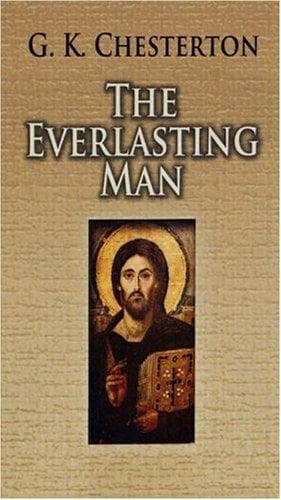
The Everlasting ManChesterton, G. K. (Gilbert Keith)
Religion
The Everlasting Man
Chesterton, G. K. (Gilbert Keith)
Catholic Church -- Apologetic works; Christianity and other religions; Religion
What was the meaning of all that whisper of fear that ran round the West
under the shadow of Islam, and fills every old romance with incongruous
images of Saracen knights swaggering in Norway or the Hebrides? Why were
men in the extreme West, such as King John if I remember rightly,
accused of being secretly Moslems, as men are accused of being secretly
atheists? Why was there that fierce alarm among some of the authorities
about the rationalistic Arab version or Aristotle? Authorities are
seldom alarmed like that except when it is too late. The answer is that
hundreds of people probably believed in their hearts that Islam would
conquer Christendom; that Averroes was more rational than Anselm; that
the Saracen culture was really, as it was superficially, a superior
culture. Here again we should probably find a whole generation, the
older generation, very doubtful and depressed and weary. The coming of
Islam would only have been the coming of Unitarianism a thousand years
before its time. To many it may have seemed quite reasonable and quite
probable and quite likely to happen. If so, they would have been
surprised at what did happen. What did happen was a roar like thunder
from thousands and thousands of young men, throwing all their youth into
one exultant counter-charge; the Crusades. It was the sons of St.
Francis, the Jugglers of God, wandering singing over all the roads of
the world; it was the Gothic going up like a flight of arrows; it was
the waking of the world. In considering the war of the Albigensians, we
come to the breach in the heart of Europe and the landslide of a new
philosophy that nearly ended Christendom for ever. In that case the new
philosophy was also a very new philosophy; it was pessimism. It was none
the less like modern ideas because it was as old as Asia; most modern
ideas are. It was the Gnostics returning; but why did the Gnostics
return? Because it was the end of an epoch, like the end of the Empire;
and should have been the end of the Church. It was Schopenhauer hovering
over the future; but it was also Manichaeus rising from the dead; that
men might have death and that they might have it more abundantly.
Public-domain text, read in full here on John Shaqi.
Reviews
Reviews
No reviews yet
Be the first to share your thoughts on this work.
Elsewhere in the archive
Join the Discussion
Join the discussion
Sign in to leave a comment or review.
Sign InorCreate an account