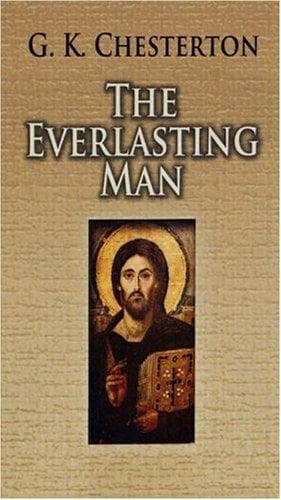
The Everlasting ManChesterton, G. K. (Gilbert Keith)
Religion
The Everlasting Man
Chesterton, G. K. (Gilbert Keith)
Catholic Church -- Apologetic works; Christianity and other religions; Religion
Human civilisation is older than human records. That is the sane way of
stating our relations to these remote things. Humanity has left examples
of its other arts earlier than the art of writing; or at least of any
writing that we can read. But it is certain that the primitive arts were
arts; and it is in every way probable that the primitive civilisations
were civilisations. The man left a picture of the reindeer, but he did
not leave a narrative of how he hunted the reindeer; and therefore what
we say of him is hypothesis and not history. But the art he did practise
was quite artistic; his drawing was quite intelligent, and there is no
reason to doubt that his story of the hunt would be quite intelligent,
only if it exists it is not intelligible. In short, the prehistoric
period need not mean the primitive period, in the sense of the barbaric
or bestial period. It does not mean the time before civilisation or the
time before arts and crafts. It simply means the time before any
connected narratives that we can read. This does indeed make all the
practical difference between remembrance and forgetfulness; but it is
perfectly possible that there were all sorts of forgotten forms of
civilisation, as well as all sorts of forgotten forms of barbarism. And
in any case everything indicated that many of these forgotten or
half-forgotten social stages were much more civilised and much less
barbaric than is vulgarly imagined to-day. But even about these
unwritten histories of humanity, when humanity was quite certainly
human, we can only conjecture with the greatest doubt and caution. And
unfortunately doubt and caution are the last things commonly encouraged
by the loose evolutionism of current culture. For that culture is full
of curiosity; and the one thing that it cannot endure is the agony of
agnosticism. It was in the Darwinian age that the word first became
known and the thing first became impossible.
Public-domain text, read in full here on John Shaqi.
Reviews
Reviews
No reviews yet
Be the first to share your thoughts on this work.
Join the Discussion
Join the discussion
Sign in to leave a comment or review.
Sign InorCreate an account