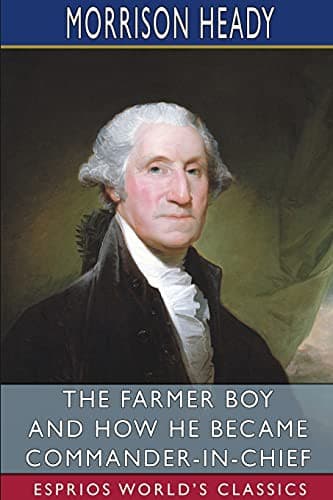
The Farmer Boy, and How He Became Commander-In-ChiefHeady, Morrison
History
The Farmer Boy, and How He Became Commander-In-Chief
Heady, Morrison
Washington, George, 1732-1799
Failing to get redress for their grievances, the colonists resolved
that the source of these same grievances should not be a source of
profit to those who imposed them. To bring about this result, they, as
one man, entered into what was called the "non-importation
agreement,"--or, in other words, an agreement by which they solemnly
pledged themselves to abstain from the use of all articles burdened
with a tax, until such tax should be removed; and, furthermore, that
they would not buy or use any thing that they were forbidden to
manufacture themselves; and, still furthermore, that not a ship of
theirs should trade with British ports, until the act forbidding them
to trade with foreign ports should be repealed. Some of them, I dare
say, would have gone so far, had that been possible, as to pledge
themselves not to die, until the Stamp Act, compelling them to write
their wills on stamp-paper, was also repealed. This agreement was so
rigidly observed, that the men took to wearing jeans, and the women
linsey-woolseys, which they wove in their own looms; the old ladies
drank sassafras-tea, sweetened with maple-sugar; and old gentlemen
wrote no wills, but declared them on their death-bed to their weeping
families by word of mouth. Whether the people stopped marrying or not,
it is not known with certainty; but from my knowledge of human nature,
which is extensive, I do not think I should greatly hazard my
reputation as a historian, were I to state flatly, roundly, and
emphatically, that it had not the least effect in that way.
Public-domain text, read in full here on John Shaqi.
Reviews
Reviews
No reviews yet
Be the first to share your thoughts on this work.
Elsewhere in the archive
Join the Discussion
Join the discussion
Sign in to leave a comment or review.
Sign InorCreate an account