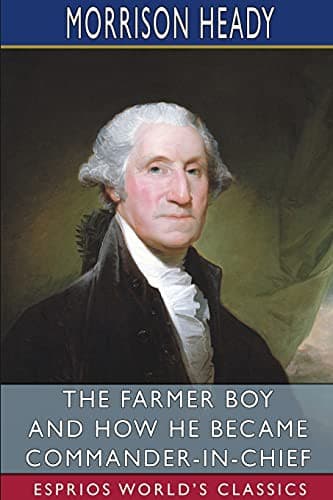
The Farmer Boy, and How He Became Commander-In-ChiefHeady, Morrison
History
The Farmer Boy, and How He Became Commander-In-Chief
Heady, Morrison
Washington, George, 1732-1799
"Deeply do I regret, my dear son," said she, "to disappoint you in a
wish you have so near at heart: but I find I cannot bring myself to
give you up yet; for, young as you are, your aid and counsel have
already become to me of the greatest service and comfort; and these
little fatherless ones, now weeping around you, have learned to look
up to you as their protector and guide. You know too little of the
ways of the world, and are too young and inexperienced, to go forth to
endure its hardships, and battle with its temptations, that lie in
wait on every side to entrap the unwary, and lead them down to
destruction. Without you, our home would be lonely indeed: then, for
your mother's sake, and for the sake of these little ones, give up
your darling scheme, for the present at least, that we may all be
happy at home once more together."
Thus entreated, what could he do but yield consent to the wishes of a
loving and prudent mother, and remain at home? where, in a few days,
his noble self-denial was rewarded with a sweet contentment of mind
that he could never have known had he left the dear ones in sorrow
behind him, and gone forth to spend months and years upon the billows
of the lonely seas. Surely a kind Heaven so ordered that the welfare
and happiness of us Americans, and, it may be, that of the whole
world, should be made to depend upon the promptings of a mother's
love; for had the boy Washington realized this early dream, and gone
forth in that gallant ship, he might have perished in the stormy deep,
and we had never known the name we now love so much to praise and
venerate. Or, by his distinguished abilities, he might have risen to
become in time the Lord High Admiral of the British Navy; and, instead
of being set apart to the salvation of his native land, might have
been made an instrument to its destruction, impossible as such an
event may now appear to us, with our knowledge of the glorious work he
did perform when in the fulness of his strength and years, and
accustomed as we are to behold in him our model of all that is great
and virtuous in mankind.
IV.
"RULES OF BEHAVIOR."
Public-domain text, read in full here on John Shaqi.
Reviews
Reviews
No reviews yet
Be the first to share your thoughts on this work.
Join the Discussion
Join the discussion
Sign in to leave a comment or review.
Sign InorCreate an account