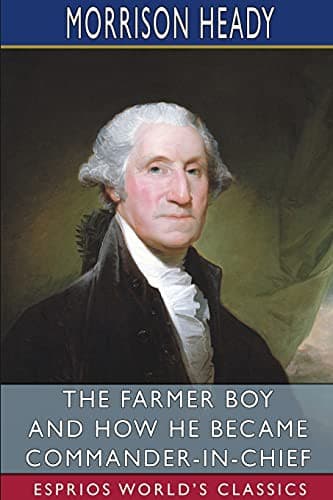
The Farmer Boy, and How He Became Commander-In-ChiefHeady, Morrison
History
The Farmer Boy, and How He Became Commander-In-Chief
Heady, Morrison
Washington, George, 1732-1799
"12. Take all advice thankfully, in what time or place soever
given; but afterwards, not being blamable, take a time or place
convenient to let him know it that gave it.
"13. Mock not in jest at any thing of importance: if you
deliver any thing witty and pleasant, abstain from laughing
thereat yourself.
"14. Wherein you reprove another, be unblamable yourself; for
example is better than precept.
"15. Use no reproachful language against any one; neither curse
nor revile.
"16. Be not hasty to believe flying reports to the injury of
any.
"17. In your apparel, be modest, and endeavor to accommodate
yourself to nature, rather than to procure admiration; keep to
the fashion of your equals, such as are civil and orderly, with
respect to time and places.
"18. Play not the peacock, looking everywhere about you to see
if you be well decked, if your shoes fit well, if your
pantaloons sit neatly, and clothes handsomely.
"19. Associate yourself with men of good quality, if you esteem
your reputation; for it is better to be alone than in bad
company.
"20. Let your conversation be without malice or envy, for it is
a sign of a kindly and commendable nature; and, in all causes
of passion, admit reason to govern.
"21. Be not immodest in urging a friend to make known a secret.
"22. Utter not base and frivolous things amongst grave and
learned men, nor very difficult questions or subjects among the
ignorant, nor things hard to believe.
"23. Speak not of doleful things in time of mirth, nor at the
table; speak not of melancholy things, as death and wounds;
and, if others mention them, change, if you can, the discourse.
Tell not your dreams but to your intimate friend.
"24. Break not a jest, when none take pleasure in mirth; laugh
not loud, nor at all, without occasion; deride no man's
misfortune, though there seem to be some cause.
"25. Speak not injurious words, neither in jest nor earnest;
scoff at none, although they give occasion.
"26. Seek not to lessen the merits of others; neither give more
than due praise.
"27. Go not thither where you know not whether you shall be
welcome. Give not advice without being asked; and, when
desired, do it briefly.
"28. Reprove not the imperfections of others; for that belongs
to parents, masters, and superiors.
"29. Gaze not on the marks or blemishes of others, and ask not
how they came. What you may speak in secret to your friend,
deliver not before others.
"30. Think before you speak; pronounce not imperfectly, nor
bring out your words too hastily, but orderly and distinctly.
Public-domain text, read in full here on John Shaqi.
Reviews
Reviews
No reviews yet
Be the first to share your thoughts on this work.
Join the Discussion
Join the discussion
Sign in to leave a comment or review.
Sign InorCreate an account