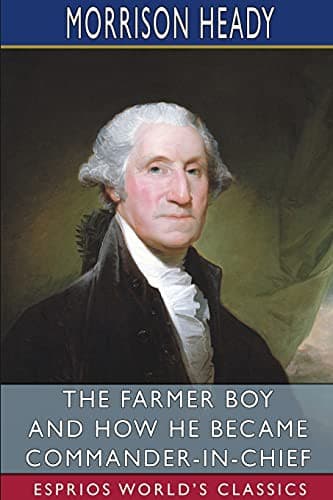
The Farmer Boy, and How He Became Commander-In-ChiefHeady, Morrison
History
The Farmer Boy, and How He Became Commander-In-Chief
Heady, Morrison
Washington, George, 1732-1799
Capt. Mackay and his company of Independents had, at Washington's
request, come up a little while before, and now joined in the retreat.
But they joined in nothing else; for, pluming themselves upon their
greater respectability as soldiers of his Britannic majesty, they lent
not a helping hand in this hour of pressing need, although the danger
that lurked behind threatened all alike. They marched along, these
coxcombs, daintily picking their way over the smoothest roads, and too
genteel to be burdened with any thing but their clean muskets and tidy
knapsacks. This ill-timed and insolent behavior served only to
aggravate the trials of the other poor fellows all the more; and when,
at last, they had managed to drag the cannon and the wagons and
themselves to Fort Necessity, they were so overcome with fatigue and
hunger, and so moved with indignation at the conduct of the
Independents, that they threw down their ropes and packs, and flatly
refused to be marched further. Seeing their pitiful plight, and that
it would be impossible to reach the settlements, Col. Washington, as
their last chance of safety, turned aside, and once more took shelter
in his little fort.
As Capt. Mackay and his company of gentlemen fighters had done nothing
towards strengthening the works during his absence, Washington ordered
a few trees to be felled in the woods hard by, as a still further
barrier to the approach of the enemy. Just as the last tree went
crashing down, the French and their Indian allies, nine hundred
strong, came in sight, and opened a scattering fire upon the fort, but
from so great a distance as made it little more than an idle waste of
powder and lead. Suspecting this to be but a feint of the crafty foe
to decoy them into an ambuscade, Washington ordered his men to keep
within the shelter of the fort, there to lie close, and only to shoot
when they could plainly see where their bullets were to be sent.
A light skirmishing was kept up all day, and until a late hour in the
night; the Indians keeping the while within the shelter of the woods,
which at no point came within sixty yards of the palisades. Whenever
an Indian scalp-lock or a French cap showed itself from among the
trees or bushes, it that instant became the mark of a dozen
sharpshooters watching at the rifle-holes of the fort. All that day,
and all the night too, the rain poured down from one black cloud, as
only a summer ruin can pour, till the ditches were filled with water,
and the breastworks nothing but a bank of miry clay; till the men were
drenched to the skin, and the guns of many so dampened as to be unfit
for use.
Public-domain text, read in full here on John Shaqi.
Reviews
Reviews
No reviews yet
Be the first to share your thoughts on this work.
Elsewhere in the archive
Join the Discussion
Join the discussion
Sign in to leave a comment or review.
Sign InorCreate an account