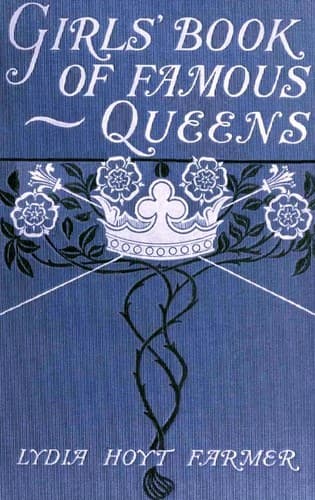
The Girls' Book of Famous QueensFarmer, Lydia Hoyt
History
The Girls' Book of Famous Queens
Farmer, Lydia Hoyt
Queens -- Biography -- Juvenile literature
In 1540 Henry VIII. married his fourth wife, Anne of Cleves. She had
been represented as a great beauty by Cromwell, whom the king
had raised to power. This Cromwell was a former servant of Cardinal
Wolsey. But so great was Henry’s disgust upon beholding the awkward,
ill-dressed, ill-featured, German princess, whom he had been inveigled
into making his fourth bride, that though the marriage was perforce
celebrated according to agreement, the unfortunate Cromwell was soon
after disgraced and executed, and the sensitive conscience of the
royal hypocrite was once again called into requisition to annul this
ill-starred union. The beautiful face of Lady Catharine Howard no
doubt quickened the stings of the conveniently tender conscience of
this dissembling King of Knaves, who declared with pious cant that,
having ascertained that Anne of Cleves had previously been betrothed
to the Duke of Lorraine, his punctilious scruples would not allow him
to retain her as his wife; whereupon King Henry, who waited not now
for pope or bishop to annul his marriage vows and break his conjugal
fetters, bestowed upon his divorced wife the title of “Adopted Sister,”
which honor poor Anne of Cleves consented to receive, doubtless
thanking heaven for having preserved her from the more terrible fate of
some of the wives of this fickle consort.
By way of celebrating his fifth nuptials, King Henry sent to the stake
Dr. Barnes and other heretics, while certain Catholics were quartered
for having refused to take the oath of supremacy. This persecution
of both parties occasioned the indignation of both Catholics and
Protestants. “How do folks manage to live here?” exclaimed a Frenchman,
in surprise at such fickle punishments. “The Papists are hanged, and
the anti-Papists are burned,” was the answer.
But Catharine Howard had not been queen of England one year before
her terrible doom overshadowed her. The king discovered certain
condemnatory circumstances regarding the conduct of the queen previous
to her marriage with him, and in a few short months Catharine also
expiated her ambition and her supposed guilt upon the scaffold.
King Henry again resorted to his literary pursuits for solace, being
for the time disgusted with his experiments in the matrimonial line,
as before his hapless wives had also been, and forsooth with graver
cause and better reason. “The king had better marry a widow,” said
the people; and that idea seeming to have occurred also to the mind
of his august majesty, in the year 1543, this “royal Bluebeard of
English history” took for his sixth wife, the Lady Catherine Parr, the
three months’ widow of Lord Latimer. She was an ardent partisan of the
Protestant party, as well as learned and beautiful, but her skill in
argument had well-nigh cost her dear.
Public-domain text, read in full here on John Shaqi.
Reviews
Reviews
No reviews yet
Be the first to share your thoughts on this work.
Elsewhere in the archive
Join the Discussion
Join the discussion
Sign in to leave a comment or review.
Sign InorCreate an account