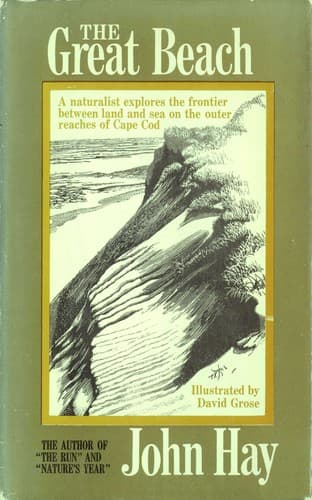
Cape Cod (Mass.) -- Description and travel; Natural history -- Massachusetts -- Cape Cod
The area in which I stayed for that brief nomadic period of my own, was
filled with cottages, on slopes ending on the cliff above the beach, a
majority unoccupied but with a house here and there showing a little
more substance to it, the evidence of a year-round resident. With some
exceptions, they were bare in appearance and devoid of individuality.
No uncommon effort had been made to give them much distinction. In
the winter and fall they lost whatever color by human association
they might have had during the summer. Some of them were flat-roofed,
pastel-painted little boxes without even the virtue of exposed wood,
and since they were not in Florida they could not borrow any youth
from the sunshine. Their spirit was old before they were built, and in
that respect indigenous to the seashore. The bare coast and the gray
waters seemed to hold them in contempt, or at least indifference, and
they became as gray themselves. They are due credit for their lack of
pretension, whether planned or not. They did not take up the landscape
with improvements and cultivation. They sat on their own little plots
of sandy ground, with a few pitch pines, Hudsonia and scrub oak,
joining the general economy of the landscape, no blowing leaves and
limbs above them, no spreading lawns around. Whoever might live in
them after the mild, money-making season could be gripped by the real
weather without interference.
Our age may give the lie to all those who are interested in antiques,
even if there are any old ones left. Perhaps there is no alternative if
we have to get to the moon or bust. Will there ever be such a thing as
an antique rocket? But there is still a flow of age, a distant sense of
things that it is possible to find, hanging like mist over an inlet,
booming like the sea over the far side of a hill.
You can still walk the Old King’s Highway in some areas, a single-track
road where it is easy to imagine a horse and wagon or a stage, during
the years when it took two days to get to Boston and the sea route was
the preferred one. Even with the jet planes droning overhead and the
cars grinding gears in the distance and the about-to-break sound of
the future in the sky somewhere ahead, it is as ancient and distinct as
the outline of an oak tree. Just its narrowness is enough. I spent half
one afternoon trying to find it in one part of its extent, and at last
there it was, quite clearly, just the right size for the eighteenth
century, with narrow ruts in sandy ground, lowered, indented, washed
out in some places, grown over in others, but a ghost with definition.
Public-domain text, read in full here on John Shaqi.
Reviews
Reviews
No reviews yet
Be the first to share your thoughts on this work.
Join the Discussion
Join the discussion
Sign in to leave a comment or review.
Sign InorCreate an account