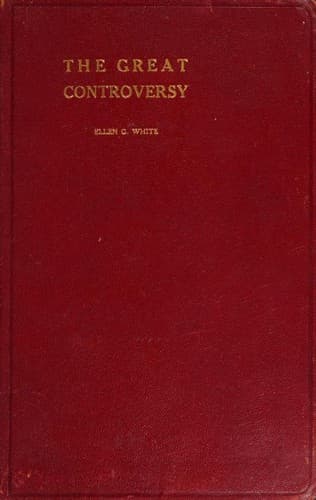
The Great Controversy Between Christ and Satan — John Shaqi
The Great Controversy Between Christ and SatanWhite, Ellen Gould Harmon
ReligionComparative
The Great Controversy Between Christ and Satan
White, Ellen Gould Harmon
Good and evil; Seventh-Day Adventists -- Doctrines; Spiritual direction
To these words, Jesus made the solemn and startling reply, “Verily I say
unto you, There shall not be left here one stone upon another, that shall
not be thrown down.”(30)
With the overthrow of Jerusalem the disciples associated the events of
Christ’s personal coming in temporal glory to take the throne of universal
empire, to punish the impenitent Jews, and to break from off the nation
the Roman yoke. The Lord had told them that He would come the second time.
Hence at the mention of judgments upon Jerusalem, their minds reverted to
that coming; and as they were gathered about the Saviour upon the Mount of
Olives, they asked, “When shall these things be? and what shall be the
sign of Thy coming, and of the end of the world?”(31)
The future was mercifully veiled from the disciples. Had they at that time
fully comprehended the two awful facts,—the Redeemer’s sufferings and
death, and the destruction of their city and temple,—they would have been
overwhelmed with horror. Christ presented before them an outline of the
prominent events to take place before the close of time. His words were
not then fully understood; but their meaning was to be unfolded as His
people should need the instruction therein given. The prophecy which He
uttered was twofold in its meaning: while foreshadowing the destruction of
Jerusalem, it prefigured also the terrors of the last great day.
Jesus declared to the listening disciples the judgments that were to fall
upon apostate Israel, and especially the retributive vengeance that would
come upon them for their rejection and crucifixion of the Messiah.
Unmistakable signs would precede the awful climax. The dreaded hour would
come suddenly and swiftly. And the Saviour warned His followers: “When ye
therefore shall see the abomination of desolation, spoken of by Daniel the
prophet, stand in the holy place, (whoso readeth, let him understand:)
then let them which be in Judea flee into the mountains.”(32) When the
idolatrous standards of the Romans should be set up in the holy ground,
which extended some furlongs outside the city walls, then the followers of
Christ were to find safety in flight. When the warning sign should be
seen, those who would escape must make no delay. Throughout the land of
Judea, as well as in Jerusalem itself, the signal for flight must be
immediately obeyed. He who chanced to be upon the housetop must not go
down into his house, even to save his most valued treasures. Those who
were working in the fields or vineyards must not take time to return for
the outer garment laid aside while they should be toiling in the heat of
the day. They must not hesitate a moment, lest they be involved in the
general destruction.
Public-domain text, read in full here on John Shaqi.
Reviews
Reviews
No reviews yet
Be the first to share your thoughts on this work.
Join the Discussion
Join the discussion
Sign in to leave a comment or review.
Sign InorCreate an account