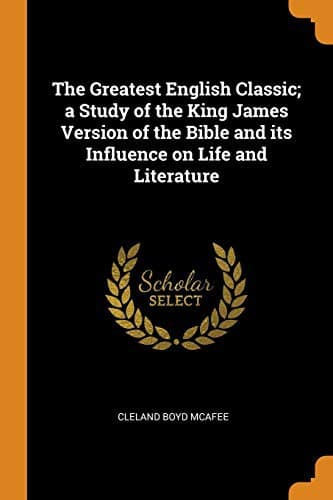
The Greatest English Classic: A Study of the King James Version of the Bible and Its Influence on Life and LiteratureMcAfee, Cleland Boyd
Religion
The Greatest English Classic: A Study of the King James Version of the Bible and Its Influence on Life and Literature
McAfee, Cleland Boyd
Bible -- History; Bible -- Influence; Bible and literature; Bible. English -- Versions -- Authorized
All this while, and especially between the time when Tindale first
published his New Testament and the time they burned him for doing so, an
interesting change was going on in England. The King was Henry VIII., who
was by no means a willing Protestant. As Luther's work appeared, it was
this same Henry who wrote the pamphlet against him during the Diet of
Worms, and on the ground of this pamphlet, with its loyal support of the
Church against Luther, he received from the Roman pontiff the title
"Defender of the Faith," which the kings of England still wear. And yet
under this king this strange succession of dates can be given. Notice them
closely. In 1526 Tindale's New Testament was burned at St. Paul's by the
Bishop of London; ten years later, 1536, Tindale himself was burned with
the knowledge and connivance of the English government; and yet, one year
later, 1537, two versions of the Bible in English, three-quarters of which
were the work of Tindale, were licensed for public use by the King of
England, and were required to be made available for the people! Eleven
years after the New Testament was burned, one year after Tindale was
burned, that crown was set on his work! What brought this about?
Three facts help to explain it. First, the recent years of Bible
translation were having their weight. The fugitive copies of the Bible
were doing their work. Spite of the sharp opposition fifty thousand copies
of Tindale's various editions had actually been published and circulated.
Men were reading them; they were approving them. The more they read, the
less reason they saw for hiding the Book from the people. Why should it
not be made common and free? There was strong Lutheran opinion in the
universities. It was already a custom for English teachers to go to
Germany for minute scholarship. They came back with German Bibles in
Luther's version and with Greek Testaments, and the young scholars who
were being raised up felt the influence, consciously or unconsciously, of
the free use of the Bible which ruled in many German universities.
Public-domain text, read in full here on John Shaqi.
Reviews
Reviews
No reviews yet
Be the first to share your thoughts on this work.
Join the Discussion
Join the discussion
Sign in to leave a comment or review.
Sign InorCreate an account