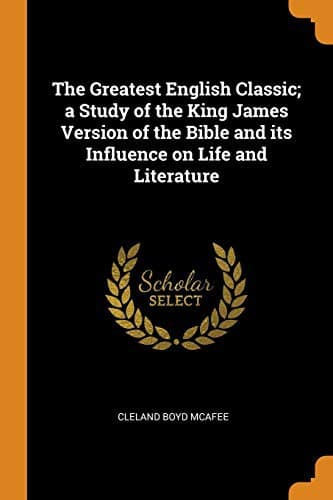
The Greatest English Classic: A Study of the King James Version of the Bible and Its Influence on Life and LiteratureMcAfee, Cleland Boyd
Religion
The Greatest English Classic: A Study of the King James Version of the Bible and Its Influence on Life and Literature
McAfee, Cleland Boyd
Bible -- History; Bible -- Influence; Bible and literature; Bible. English -- Versions -- Authorized
years after he was burned! The installation of these great books caused
tremendous excitement--crowds gathered everywhere. Bishop Bonner caused
six copies of the great volume to be located wisely throughout St.
Paul's. He found it difficult to make people leave them during the
sermons. He was so often interrupted by voices reading to a group, and by
the discussions that ensued, that he threatened to have them taken out
during the service if people would not be quiet. The Great Bible appeared
in seven editions in two years, and continued in recognized power for
thirty years. Much of the present English prayer-book is taken from it.
But this liberty was so sudden that the people naturally abused it. Henry
became vexed because the sacred words "were disputed, rimed, sung, and
jangled in every ale-house." There had grown up a series of wild ballads
and ribald songs in contempt of "the old faith," while it was not really
the old faith which was in dispute, but only foreign control of English
faith. They had mistaken Henry's meaning. So Henry began to put
restrictions on the use of the Bible. There were to be no notes or
annotations in any versions, and those that existed were to be blacked
out. Only the upper classes were to be allowed to possess a Bible.
Finally, the year before his death, all versions were prohibited except
the Great Bible, whose cost and size precluded secret use. The decree led
to another great burning of Bibles in 1546--Tindale, Coverdale,
Matthew--all but the Great Bible. The leading religious reformers took
flight and fled to European Protestant towns like Frankfort and
Strassburg. But the Bible remained. Henry VIII. died. The Bible lived on.
Under Edward VI., the boy king, coming to the throne at nine and dying at
fifteen, the regency with Cranmer at its head earned its bad name. But
while its members were shamelessly despoiling churches and enriching
themselves they did one great service for the Bible. They cast off all
restrictions on its translation and publication. The order for a Great
Bible in every church was renewed, and there was to be added to it a copy
of Erasmus's paraphrase of the four gospels. Nearly fifty editions of the
Bible, in whole or in part, appeared in those six years.
Public-domain text, read in full here on John Shaqi.
Reviews
Reviews
No reviews yet
Be the first to share your thoughts on this work.
Join the Discussion
Join the discussion
Sign in to leave a comment or review.
Sign InorCreate an account