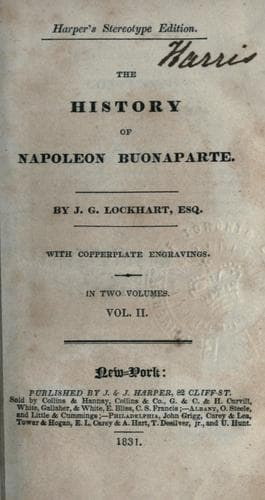
The History of Napoleon BuonaparteLockhart, J. G. (John Gibson)
History
The History of Napoleon Buonaparte
Lockhart, J. G. (John Gibson)
France -- Kings and rulers -- Biography; Napoleon I, Emperor of the French, 1769-1821
Many other judicious measures might be mentioned in this place. Some
emigrants, cast on the shores by shipwreck, had been imprisoned and
destined for trial by the Directory. They were at once set free: and, in
like manner, La Fayette and other distinguished revolutionists, who had
been exiled for not adhering to all the wild notions of the preceding
administrations, were at once recalled. Carnot was one of these:
Buonaparte forthwith placed him at the head of the war department; and
the reform of the army was prosecuted with the vigour which might have
been expected from the joint skill and talent of the provisional head of
the government and this practised minister. The confusion which had of
late prevailed in that department was extreme. The government did not
even know the existence of regiments raised in the provinces: arms,
clothing, discipline in every article, had been neglected. The
organisation of the army was very speedily mended.
The insurgent Chouans next claimed attention: and here the personal
character of Napoleon gave him advantages of the first importance. The
leaders of those brave bands were disposed to consider such a soldier as
a very different sort of ruler from the Pentarchy of the Luxembourg; and
their admiration for his person prepared them to listen to his terms.
The first measures of the new government were obviously calculated to
soothe their prejudices, and the general display of vigour in every
branch of the administration to overawe them. Chatillon, D'Antichamp,
Suzannet, and other royalist chiefs, submitted in form. Bernier, a
leading clergyman in La Vendée, followed the same course, and was an
acquisition of even more value. Others held out; but were soon routed in
detail, tried and executed. The appearances of returning tranquillity
were general and most welcome.
Some of the party vanquished on the 18th Brumaire, however, still
lingered in Paris, and were busy in plotting new convulsions. It was
therefore the advice of all the ministers to condemn them to exile; and
lists of proscription were drawn up and published. But Buonaparte only
meant to overawe these persons: no one was apprehended: they kept quiet
for a season; and the edict of exile sank by degrees into oblivion.
Public-domain text, read in full here on John Shaqi.
Reviews
Reviews
No reviews yet
Be the first to share your thoughts on this work.
Elsewhere in the archive
Join the Discussion
Join the discussion
Sign in to leave a comment or review.
Sign InorCreate an account