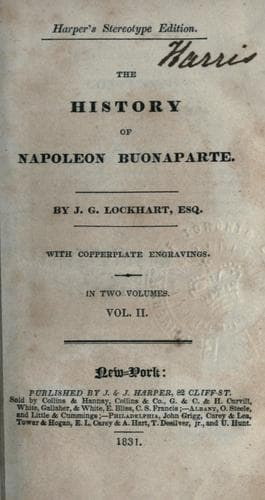
The History of Napoleon BuonaparteLockhart, J. G. (John Gibson)
History
The History of Napoleon Buonaparte
Lockhart, J. G. (John Gibson)
France -- Kings and rulers -- Biography; Napoleon I, Emperor of the French, 1769-1821
On the 17th of May, Napoleon issued, from Vienna, his final decree
declaring the temporal sovereignty of the Pope to be wholly at an end,
incorporating Rome with the French empire, and declaring it to be _his_
second city; settling a pension on the holy father in his spiritual
capacity--and appointing a committee of administration for the civil
government of Rome. The Pope, on receiving the Parisian
senatus-consultum, ratifying this imperial rescript, instantly
fulminated a bull of excommunication against Napoleon. Shortly after
some unauthentic news from Germany inspired new hopes into the adherents
of the Pontiff; and, disturbances breaking out, Miollis, on pretence
that a life sacred in the eyes of all Christians might be endangered,
arrested Pius in his palace at midnight, and forthwith despatched him
under a strong escort to Savona.
The intelligence of this decisive step reached Napoleon soon after the
battle of Wagram, and he was inclined to disapprove of the conduct of
Miollis as too precipitate. It was now, however, impossible to recede;
the Pope was ordered to be conveyed across the Alps to Grenoble. But his
reception there was more reverential than Napoleon had anticipated, and
he was soon reconducted to Savona.
This business would, in any other period, have been sufficient to set
all Catholic Europe in a flame; and even now Buonaparte well knew that
his conduct could not fail to nourish and support the feelings arrayed
against him openly in Spain and in Southern Germany, and suppressed, not
extinguished, in the breasts of a great party of the French clergy at
home. He made, therefore, many efforts to procure from the Pope some
formal relinquishment of his temporal claims--but Pius VII. remained
unshaken; and the negotiation at length terminated in the removal of His
Holiness to Fontainebleau, where he continued a prisoner, though treated
personally with respect, and even magnificence, during more than three
years:--until, in the general darkening of his own fortunes, the
imperial jailer was compelled to adopt another line of conduct.
Public-domain text, read in full here on John Shaqi.
Reviews
Reviews
No reviews yet
Be the first to share your thoughts on this work.
Elsewhere in the archive
Join the Discussion
Join the discussion
Sign in to leave a comment or review.
Sign InorCreate an account