The History of Parliamentary Taxation in England — John Shaqi
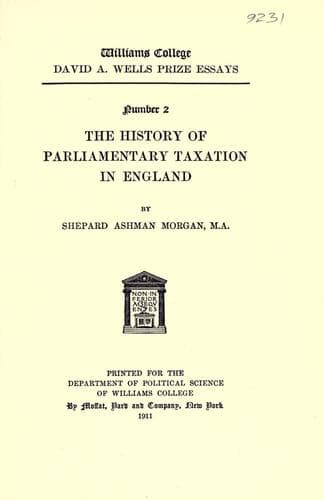
The History of Parliamentary Taxation in EnglandMorgan, Shepard Ashman
History
The History of Parliamentary Taxation in England
Morgan, Shepard Ashman
Taxation -- Great Britain; Taxation -- Great Britain -- History
Things went by contraries. Stephen allowed the nobles to make
themselves impregnable in the royal castles and then sought to
dislodge them by raising up a new and hostile baronage. The nobles,
needing money to carry on war amongst themselves and against the king,
extorted it from the people. “Those whom they suspected to have any
goods they took by night and by day, seizing both men and women,” says
the Saxon Chronicle,[27] “and they put them in prison for their gold
and silver, and tortured them with pains unspeakable, for never were
martyrs tormented as these were.” And then, “They were continually
levying an exaction from the towns, which they called Tenserie (a
payment to the superior lord for protection), and when the miserable
inhabitants had no more to give, then plundered they and burnt all the
towns, so that well mightest thou walk a whole day’s journey nor ever
shouldest thou find a man seated in a town, or its lands tilled.”
Henry of Huntingdon adds a detail which fills out the picture of
wretchedness. Speaking of Stephen’s promise to abolish the Danegeld
in 1135, shortly after his accession, the chronicler says, “The king
promised that the Danegeld, that is two shillings for a hide of land,
which his predecessors had received yearly, should be given up forever.
These ... he promised in the presence of God; but he kept none of
them.”[28]
[Henry II, 1154-1189]
By the treaty of Wallingford in 1153, Stephen agreed that the crown
should descend at his death to Henry of Anjou,[29] the son of the
Empress Matilda, and great-grandson of the Conqueror. The treaty
provided, also, for comprehensive reforms which Stephen, a melancholy
figure in contrast with the vigorous Henry, tried to work out. Stephen
died at the end of a year’s attempt to put in operation the new
programme and Henry came to the throne. Henry’s reign was marked by a
regular and peaceful administration of the government which had its
rise in the genius of the king for organization. It witnessed too the
struggle with Thomas à Becket, a conflict which has been pointed to as
“the first instance of any opposition to the king’s will in the matter
of taxation which is recorded in our national history.”[30]
[Controversy with Becket over the Sheriff’s Aid]
The story of it is full of dramatic interest. At the Council of
Woodstock in 1163, “the question was moved,” so goes the Latin
narrative, “concerning a certain custom.” This custom, which amounted
to two shillings from each hide, had previously fallen to the sheriffs,
but this “the king,” so continues the Latin account, “wished to enroll
in the treasury and add to his own revenues.”[31]
In response to this, Becket is recorded as saying, “Not as revenue, my
lord king, saving your pleasure, will we give it: but if the sheriffs
and servants and ministers of the shires will serve us worthily and
defend our dependents, we will not fail in giving them their aid.”[32]
Public-domain text, read in full here on John Shaqi.
Reviews
Reviews
No reviews yet
Be the first to share your thoughts on this work.
Join the Discussion
Join the discussion
Sign in to leave a comment or review.
Sign InorCreate an account