The History of Parliamentary Taxation in England — John Shaqi
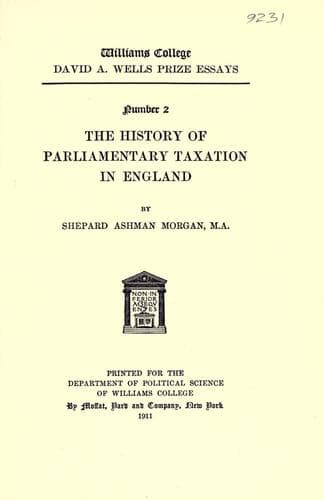
The History of Parliamentary Taxation in EnglandMorgan, Shepard Ashman
History
The History of Parliamentary Taxation in England
Morgan, Shepard Ashman
Taxation -- Great Britain; Taxation -- Great Britain -- History
Again, five years later, Henry being in dire distress for money because
of unwise expenditure and the lightness of recent taxation,[94]
summoned an extraordinary council of barons and prelates “to arrange
the royal business” and matters concerning the whole kingdom. William
de Ralegh, a clerk of the king, introduced the royal needs, saying
that “the king humbly demands assistance of you in money.” Sensing
beforehand an attitude of antagonism, he made this remarkable
concession, that “the money which may be raised by your good will
shall be kept to be expended for the necessary uses of the kingdom,
at the discretion of any of you elected for the purpose.” But the
barons failed to perceive the greatness of the opportunity which lay
open to them. Had they but availed themselves of it, they would have
gone far toward the establishment of the power of the legislature
over the public purse, and might have accomplished in a moment,
had they been able to maintain their control, what many succeeding
parliaments were to strive for in vain. But apparently the baronage
was not gifted with political perception; they saw only a demand for
money and “began to murmur.” They complained that the foreign advisers
of the king had been wasting the royal revenue and that there was no
great enterprise afoot which required a full treasury. Then the king
proceeded to conciliate them with what in comparison with the proposed
concession of the disbursing commission, was a mess of pottage; he
ordered the renewal of the sentence of excommunication of all violators
of the Charter, promised to abide by it himself, and received three
additional Councillors named by the Council.[95] Thereupon a grant
of the thirtieth part of all the movable property in the kingdom was
made by the lords “for themselves and their villans.”[96] In this
phrase of the writ is evidence in favor of the supposition that the
lords of the Council regarded themselves as authoritative spokesmen
for their vassals. The money was to be collected in accordance with
the prescription of the Council; four knights and a clerk (appointed
apparently by the king), were to receive the assessment of each
township from the reeve and four men, elected for the purpose. Here was
evidence of progress; the step was not very long from the assessment
and collection of a tax to the granting of it by the people themselves.
The king profited to the amount of some £22,600.
[Refusal of a grant, 1242]
Public-domain text, read in full here on John Shaqi.
Reviews
Reviews
No reviews yet
Be the first to share your thoughts on this work.
Join the Discussion
Join the discussion
Sign in to leave a comment or review.
Sign InorCreate an account