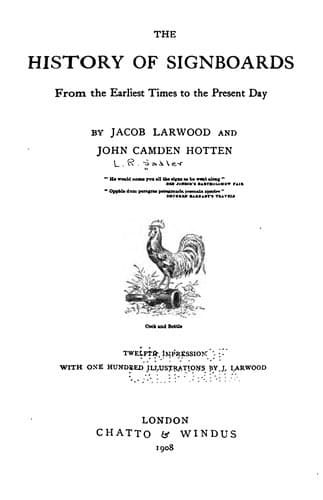
The History of Signboards, from the Earliest times to the Present DayHotten, John Camden
History
The History of Signboards, from the Earliest times to the Present Day
Hotten, John Camden
Inn signs -- England -- History; Signs and signboards -- History
DRAGONS, when apothecaries’ signs, were not derived from heraldry, but
were used to typify certain chemical actions. In an old German work on
Alchemy,[205] one of the plates represents a dragon eating his own tail;
underneath are the words,--
“Das ist gros Wunder und seltsam List,
Die höchst Artzney im Drachen ist.”[206]
In mediæval alchemy, the dragon seems to have been the emblem of
Mercury, which appears from these words on the same print: “Mercurius
recte et chymice præcipitatus vel sublimatus in sua propria aqua
resolutus et rursum coagulatus.”[207] To which are added the following
rhymes:--
“Ein Drach im Walde wohnend ist,
An Gifft demselben nichts gebrisst;
Wenn er die Sonne sieht und das Fewr
So speusst er Gifft fleugt ungehewr,
Kein Lebend Thier für ihm mag gnesn
Der Basilisc mag ihm nit gleich wesn.
Wer diesen Wurmb wol weiss zu tödtn
Der kömpt auss allen seinen Nöthen.
Sein Farber in seinem Todt sich vermehrn;
Auss seiner Gifft Artzney thut werden.
Sein Gifft verzehrt er gar und gans
Und frisst sein eign vergiften Schwantz.
Da mus er in sich selbst volbringen
Der edelst Balsam auss ihm thut tringen,
Solch grosse Tugend wird man schawen
Welches alle Weysn sich hoch erfrawen.”[208]
Hence the dragon became one of the “properties” of the chemist and
apothecary, was painted on his drug-pots, hung up as his sign, and some
dusty, stuffed crocodile hanging from the ceiling in the laboratory had
to do service for the monster, and inspire the vulgar with a profound
awe for the mighty man who had conquered the vicious reptile.
The SALAMANDER was another animal of the same class, and also
represented certain chemical actions, owing to its fabled powers of
resisting the fire. The notions of early naturalists concerning this
creature were very extraordinary. A Bestiarium in the Royal Library of
Brussels, No. 10074, says that it lives on pure fire, and produces a
substance which is neither silk nor linen, nor yet wool, of which
garments are made that can only be cleaned by fire; and that if the
animal itself falls into a burning fire, it would at once extinguish the
flames. Bossewell, besides incombustibility, attributes to the
salamander some other qualities fully as extravagant.
“Among all venomenous beastes he is the mightiest of poyson and
venyme. For if he creepe upon a tree, he infecteth all the apples or
other fruit that groweth thereon with his poyson, and killeth them
which eate thereof. Which apples, also, if they happen to falle into
any pitte of water, the strength of the poyson killeth them that
drinke thereof.”[209]
Public-domain text, read in full here on John Shaqi.
Reviews
Reviews
No reviews yet
Be the first to share your thoughts on this work.
Elsewhere in the archive
Join the Discussion
Join the discussion
Sign in to leave a comment or review.
Sign InorCreate an account