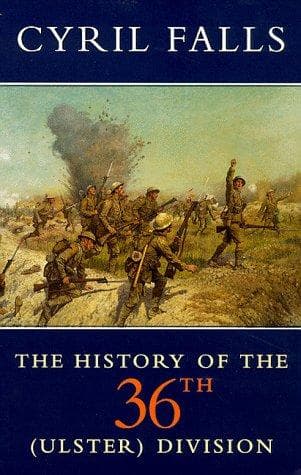
The History of the 36th (Ulster) DivisionFalls, Cyril
History
The History of the 36th (Ulster) Division
Falls, Cyril
Great Britain. Army. Division, 36th; World War, 1914-1918 -- Regimental histories -- Great Britain
The Battle of Messines has more than one claim to a prominent
position in the history of the war. It was, in the first place, the
first completely successful single operation on the British front. It
shares with the action of Malmaison, fought four months later, the
distinction of being the most perfect and successful example of the
limited offensive. Lastly, it was by far the most elaborately and
carefully "mounted" action ever fought by British arms. Fine as were
the fighting qualities of the formations and units that took part in
it, the most remarkable aspects which stand out when we look back
upon it are the perfection of its organization and of the liaison
between all arms. It represented a triumph of staff work. Every man
in the huge force under his command was made to feel the guiding hand
of the Commander of the Second Army, and of one of the most brilliant
staff officers the war discovered. The troops entered upon it with
high heart. The capture of the Vimy Ridge had seemed of good augury
for the year's campaign. The doubtful success of the French offensive
in Champagne, which might have acted as a check upon this optimism,
was not generally known.
Before no other battle was there such an infinity of detail to be
mastered as in the preparation of this. It would not be difficult to
write fifty pages about the plans. Since space permits of about six
only being allotted to them, it is impossible to do more than outline
them in the briefest manner.
Some idea of the thoroughness of the training for the assault may be
gained when it is recorded that not only were attacks practised over
ground marked out to represent the German trench system, but officers
from the flanking battalions of divisions attended each others' field
days to ensure that in the minutest details there was harmony along
the line. An elaborate model of the Messines Ridge, with all its
trenches, forts, roads, and woods, was constructed by the C.E. of the
IX. Corps on the slopes of the Scherpenberg Hill, between Locre and
La Clytte. It was surrounded by a wooden gallery and trench-board
walks, so that at least a company could examine it at one time. The
men took great interest in it, while all day long little knots of
officers were to be observed studying it. Another new feature of the
attack was the message-map served out on a large scale to officers
and N.C.O.'s. This had on one side a map of the German trenches,
on which the position could be marked; and on the other a skeleton
message-form, bringing forcibly to the mind of the sender those
details in a message that were of importance to the recipient, which,
in the heat of battle, a young and inexperienced officer might forget.
Public-domain text, read in full here on John Shaqi.
Reviews
Reviews
No reviews yet
Be the first to share your thoughts on this work.
Elsewhere in the archive
Join the Discussion
Join the discussion
Sign in to leave a comment or review.
Sign InorCreate an account