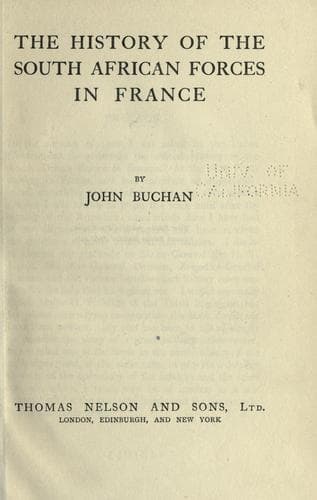
The history of the South African forces in FranceBuchan, John
History
The history of the South African forces in France
Buchan, John
South Africa. Army; World War, 1914-1918 -- Campaigns -- France; World War, 1914-1918 -- Regimental histories -- South Africa
The effort to keep up communications during these days tested every
one to the limit. Units were changing location like figures in a
kaleidoscope, and nearly the whole of the existing system of lines had
passed into the enemy’s hands. However, by the most strenuous efforts,
touch was maintained throughout the retreat, and the good work done was
recognized by the Corps commander; for in a letter addressed to Colonel
Harrison, he conveyed his appreciation of the work carried out by all
ranks of the Company during the recent operations. He added that he
realized that, owing to the untiring energy and devotion to duty shown
by all ranks, a very high standard of communication was maintained, and
thanked all for the efforts made and the results achieved. The general
commanding the Heavy Artillery also made reference in a special order of
the day to the particularly good work done by the H.A. Signal Section,
under Lieutenant Collins, in the following words:—
“That the Heavy Artillery was able to cover the whole Corps
front with its fire during each day, and to withdraw to
fresh positions each night, testifies also to the excellence
of the staff work—especially in connection with telephonic
communication.”
On the 11th Corps Headquarters fell back to Wardrecques, between St.
Omer and Hazebrouck, leaving an advanced Signal Office at La Motte until
the evening of the 12th. During the next few days it became evident that
the front was established again—at any rate temporarily—and the work of
restoring the normal network of communication at once commenced, at first
with great shortage of material, as all forward signal dumps had been
captured.
Captain Dingwall, whose health had suffered under the continuous strain
in France, now left the Company to join L Signal Battalion, and was
replaced by Captain Ross, who was relieved of the Heavy Artillery Section
by Lieutenant Collins. Lieutenant Hill took up duty at headquarters, and
Lieutenant McArthur left the Wireless Section for 51 Air Line.
At this time also Lieutenant-General Sir J. P. Ducane was summoned to
replace Sir Henry Rawlinson on the Versailles Council, and the XV. Corps
was henceforward commanded by Lieutenant-General Sir B. de Lisle. The
departure of General Ducane was much regretted by the Company, as he
had always taken a close interest in communications, and showed keen
appreciation of the work done, as is shown by the following extract from
a letter written by him to Colonel Harrison after the termination of
hostilities:—
Public-domain text, read in full here on John Shaqi.
Reviews
Reviews
No reviews yet
Be the first to share your thoughts on this work.
Elsewhere in the archive
Join the Discussion
Join the discussion
Sign in to leave a comment or review.
Sign InorCreate an account