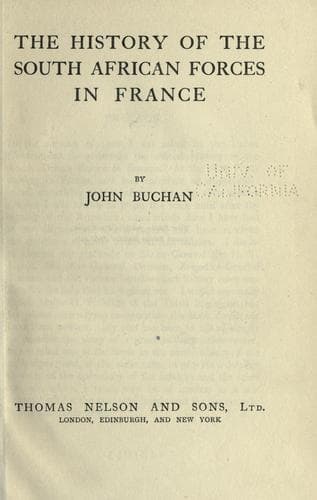
The history of the South African forces in FranceBuchan, John
History
The history of the South African forces in France
Buchan, John
South Africa. Army; World War, 1914-1918 -- Campaigns -- France; World War, 1914-1918 -- Regimental histories -- South Africa
From the very first the Committee spared neither trouble nor money to
provide for the comfort and welfare of the patients. At first the work of
visitation and entertainment was organized under Lady (Lionel) Phillips,
but later it was taken over by the Red Cross sub-committee of the Fund.
For those sufficiently convalescent to enjoy them, every possible variety
of amusement was provided. On four or five nights a week some form of
entertainment was given in the large concert hall, while every week
theatres or places of interest were visited, a special feature being the
river trips arranged by the “African World” War Comforts Service, who
also very generously provided gifts of fruit and other comforts. Further,
in order that nothing should be left undone, Lady Phillips founded a
riverside club in close proximity to the hospital, for the benefit of
those patients sufficiently convalescent to enjoy the delights of its
garden and picturesque river views.
Arrangements for bedside occupational work were, in the early days of the
hospital, made by lady visitors. Material for fancy work and needlework
was generously provided, and the making of regimental crests and other
work of a like nature helped patients to pass in bed many a weary hour
when they were still too weak to be doing the more serious vocational
work.
Shortly after the hospital was opened the problem of dealing with the
permanently disabled men of the Contingent had to be faced. After
negotiations with the War Office, it was arranged that a Vocational
Training School should be established in connection with the hospital. A
commencement was made in November 1916, and the school was finally opened
in February 1917. The scheme involved awakening the men while still in
bed to interest in their future, so that when well enough they might go
to the classrooms and undertake extensive courses of training. The South
African Military Hospital was the first primary hospital in the United
Kingdom in which permanently disabled men, while being restored to the
best possible physical condition, were trained, with due regard to their
disabilities, for a civil career to enable them on discharge from the
army to become self-supporting members of the community. There was what
was perhaps a natural reluctance on the part of the Home Government in
giving sanction to this new venture, which was for many months looked
upon as being at the best an interesting experiment. The New Zealand
authorities, however, quickly saw the advantages of the methods, and in
August 1917 a similar scheme for their hospitals was adopted.
The desirability of training permanently disabled soldiers while still
undergoing hospital treatment was finally endorsed at the Inter-Allied
Conference on Disablement Problems, held in London in May 1918, and
committees were subsequently formed in each Command to organize similar
work throughout the hospitals of the United Kingdom.
Public-domain text, read in full here on John Shaqi.
Reviews
Reviews
No reviews yet
Be the first to share your thoughts on this work.
Elsewhere in the archive
Join the Discussion
Join the discussion
Sign in to leave a comment or review.
Sign InorCreate an account