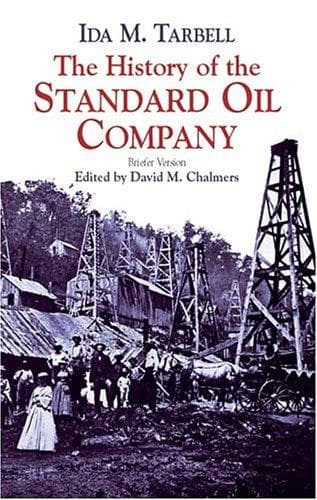
The History of the Standard Oil CompanyTarbell, Ida M. (Ida Minerva)
History
The History of the Standard Oil Company
Tarbell, Ida M. (Ida Minerva)
Petroleum industry and trade -- United States -- History; Standard Oil Company -- History
The announcement of the Central Association put an altogether new
feature on oil transportation. If this organisation succeeded, and the
refiners in it claimed nine-tenths of the capacity of the country—it
gave Mr. Rockefeller “irrevocable authority” to negotiate freights. The
Pennsylvania road immediately felt the pressure. The oil they had
carried for big firms like those of Charles Lockhart in Pittsburg and of
Warden, Frew and Company in Philadelphia was in the hands of the
Standard Oil Company, and Mr. Rockefeller asked a rebate of ten per
cent. on open rates. The road demurred. Colonel Potts objected
strenuously. Three years later in a paper discussing this rebate and its
consequences he said:
“The rebate was a modest one, as was its recipient. Yet the railway
Cassandras prophesied from it a multitude of evils—a gradual
destruction of all other refiners and a gradual absorption of their
property by the favourite, who, with this additional armament, would
rapidly progress towards a control of all cars, all pipes, all
production, and finally of the roads themselves. Their prophecies
met but little faith or consideration. The Standard leaders
themselves were especially active in discouraging any such radical
purpose. Their little rebate was enough for them. Everybody else
should prosper, as would be shortly seen. They needed no more
refineries; they had already more than they could employ—why should
they hunger after greater burdens? It was the railroads they chiefly
cared for, and next in their affections stood the 100 rival
refineries. Such beneficent longings as still remained (and their
bosoms overflowed with them) spread out their steady waves toward
the poor producers whom, not to be impious, they had always been
ready to gather under their wings, yet they would not.
“This unselfish language soothed all alarm into quiet slumbering. It
resembles the gentle fanning of the vampire’s wings, and it had the
same end in view—the undisturbed abstraction of the victim’s blood.”
Colonel Potts’s argument against the rebate—doubtless clothed in much
less picturesque language in 1875 than his feelings stirred him to in
1878, for a good enough reason, too, as we shall see—failed to convince
the Pennsylvania officials. They decided to yield to the Standard. Mr.
Cassatt, then third vice-president of the road, in charge of
transportation, said in 1879 that the rebate was given because they
found the Standard was getting very strong, that they had the backing of
the other roads, and that if the Pennsylvania wanted to retain its full
share of business and at fair rates they must make arrangements to
protect themselves.
Public-domain text, read in full here on John Shaqi.
Reviews
Reviews
No reviews yet
Be the first to share your thoughts on this work.
Elsewhere in the archive
Join the Discussion
Join the discussion
Sign in to leave a comment or review.
Sign InorCreate an account