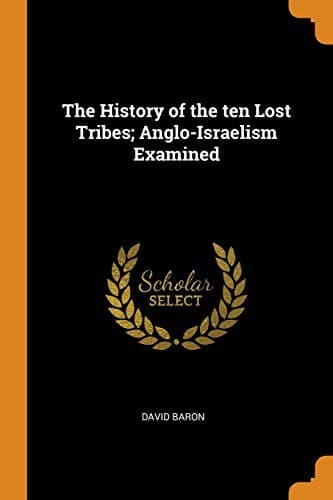
The History of the Ten "Lost" Tribes: Anglo-Israelism Examined — John Shaqi
The History of the Ten "Lost" Tribes: Anglo-Israelism ExaminedBaron, David
History
The History of the Ten "Lost" Tribes: Anglo-Israelism Examined
Baron, David
Anglo-Israelism; Jews -- History; Lost tribes of Israel
I. It goes, sometimes to the length of blasphemy (as shown in the
extracts I have copied for you at the beginning of this letter), in
misinterpreting and misapplying Scripture. One of its foundation
fallacies is that _it anticipates the Millennium_, and interprets
promises--which will only be fulfilled in that blessed period, after
Israel as a nation is converted--to the British nation at the present
time. But by this process it distorts and confuses the whole prophetic
Scripture.
II. It fosters national pride, and nationalises God's blessings in this
dispensation, which is individual and elective in its character.
Its proud boastful tone, its carnal confidence that Britain, in virtue
of its supposed identity with the "lost" tribes, is to take possession
of all the "gates" of her "enemies" and become practically mistress of
the whole globe, is enough to provoke God's judgment against the nation,
and to make the spiritual believer and every true lover of this
much-favoured land tremble. It diverts man's attention from the one
thing needful, and from the only means by which he can find acceptance
with God. This it does by teaching that "a nation composed of millions
of practical unbelievers in Christ, and ripe for apostasy, in virtue of
a certain fanciful identity between the mixed race composing that nation
and a people carried into captivity two thousand five hundred years ago,
is in the enjoyment of God's special blessing and will enjoy it on the
same grounds for ever, thus laying another foundation for acceptance
with God beside that which He has laid, even Christ Jesus."
After all, in this dispensation it is a question only as to whether men
are "in Christ" or not. If they are Christians, whether Jews or
Gentiles, their destiny is not linked either with Palestine or with
England, but with that inheritance which is incorruptible and undefiled
and which fadeth not away; and if they are not Christians, then, instead
of occupying their thoughts with vain speculations as to a supposed
identity of the British race with the "lost" Ten Tribes, it is their
duty to seek the one and only Saviour whom we must learn to know, not
after the flesh, but in the Spirit, and without whom a man, whether an
Israelite or not, is undone.
III. Then, finally, it not only robs the Jewish nation, the true Israel,
of many promises in relation to their _future_ by applying them to the
British race in the _present_ time, but it diverts attention from them
as _the_ people in whom is bound up the purpose of God in relation to
the nations, and whose "receiving again" to the heart of God, after the
long centuries of unbelief, will be as "life from the dead to the whole
world."
FOOTNOTES:
[Footnote 15: According to Grätz, "History of the Jews," vol. i., p.
186, the tribe of Simeon, which was merely a subsidiary of that of
Judah, also remained faithful to the House of David; but this is
doubtful.]
Public-domain text, read in full here on John Shaqi.
Reviews
Reviews
No reviews yet
Be the first to share your thoughts on this work.
Join the Discussion
Join the discussion
Sign in to leave a comment or review.
Sign InorCreate an account