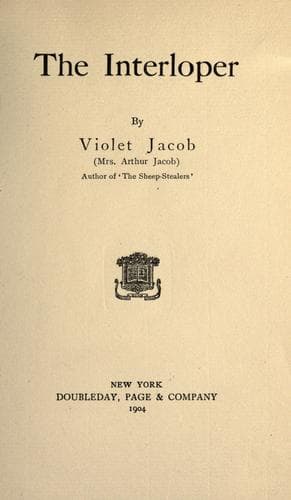
Scotland -- Social life and customs -- 19th century -- Fiction
A few minutes later she came down in the ancient pelisse which she
found comfortable after the exertions of the day. She had taught
Cecilia something of the activity which, though now a part of most
well-bred women’s lives, was then almost an eccentricity. The female
part of the little society which filled Kaims in the winter months
nodded its ‘dressed’ head over its cards and teacups in polished dismay
at the effect such ways would surely have on the young women; at other
times one might hardly have guessed at the lurking solicitude in so
many womanly bosoms; for, though unwilling, for many reasons, to
disagree with Lady Eliza, their owners were apt, with the curious
reasoning of their sex, to take her adopted daughter as a kind of
insult to themselves. It was their opinion that Miss Cecilia Raeburn,
though a sweet young lady, would, of course, find the world a _very_
different place when her ladyship’s time should come, and they only
hoped she was sensible of the debt she owed her; these quiet-looking
girls were often very sly. With prudent eyes the matrons congratulated
themselves and each other that their own Carolines and Amelias were
‘less unlike other people,’ and had defined, if modest, prospects; and
such of the Carolines and Amelias who chanced to be privily listening
would smirk in secure and conscious unison. Even Miss Hersey Robertson,
who mixed a little in these circles, was inclined to be critical.
The advent of a possible husband, though he would present in himself
the solution of all difficulties, had only vaguely entered Lady Eliza’s
mind. Like many parents, she supposed that the girl would ‘marry some
day,’ and, had anyone questioned the probability in her presence, it is
likely that she would have been very angry. Fullarton, who was
consulted on every subject, had realized that the life at Morphie was
an unnatural one for Cecilia and spoken his mind to some purpose. He
suggested that she should pass a winter in Edinburgh, and, though Lady
Eliza refused stubbornly to plunge into a society to whose customs she
felt herself unable to conform, it was arranged by him that a favourite
cousin, widow of the late Lord Advocate of Scotland, should receive the
girl. This lady, who was childless, and longed for someone to accompany
her to those routs and parties dear to her soul, found in her kinsman’s
suggestion something wellnigh providential. So kind a welcome did she
extend, that her charge, whose pleasure in the arrangement had been but
a mixed business, set out with an almost cheerful spirit.
Public-domain text, read in full here on John Shaqi.
Reviews
Reviews
No reviews yet
Be the first to share your thoughts on this work.
Join the Discussion
Join the discussion
Sign in to leave a comment or review.
Sign InorCreate an account