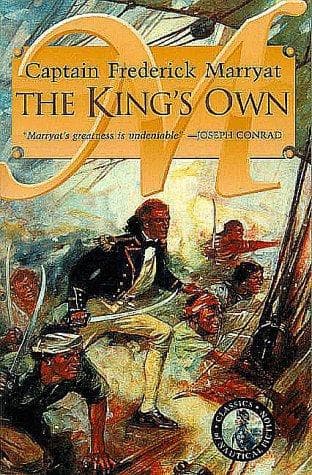
Great Britain -- History, Naval -- 18th century -- Fiction; Nore Mutiny, 1797 -- Fiction
There was a pause and dead silence, as if it were a calm, although every
passion was roused and on the alert; every bosom heaved tumultuously,
and every pulse was trebled in its action. The same feeling which so
powerfully affects the truant schoolboy--who, aware of his offence, and
dreading the punishment in perspective, can scarce enjoy the rapture of
momentary emancipation--acted upon the mutineers, in an increased ratio,
proportioned to the magnitude of their stake. Some hearts beat with
remembrance of injuries and hopes of vengeance and retaliation; others
with ambition, long dormant, bursting from its concealed recess; and
many were actuated by that restlessness which induced them to consider
any change to be preferable to the monotony of existence in compulsory
servitude.
Among the officers, some were oppressed with anxious forebodings of
evil--those peculiar sensations which, when death approaches nearly to
the outward senses, alarm the heart; others experienced no feeling but
that of manly fortitude and determination to die, if necessary, like
men; in others, alas;--in which party, small as it was, the captain was
pre-eminent--fear and trepidation amounted almost to the loss of reason.
Such was the state of the main-deck of the ship at the moment in which
we are now describing it to the reader.
And yet, in the very centre of all this tumult, there was one who,
although not indifferent to the scene around him, felt interested
without being anxious; astonished without being alarmed. Between the
contending and divided parties, stood a little boy, about six years old.
He was the perfection of childish beauty; chestnut hair waved in curls
on his forehead, health glowed on his rosy cheeks, dimples sported over
his face as he altered the expression of his countenance, and his large
dark eyes flashed with intelligence and animation. He was dressed in
mimic imitation of a man-of-war's man--loose trousers, tightened at the
hips, to preclude the necessity of suspenders--and a white duck frock,
with long sleeves and blue collar--while a knife, attached to a lanyard,
was suspended round his neck: a light and narrow-brimmed straw hat on
his head completed his attire. At times he looked aft at the officers
and marines; at others he turned his eyes forward to the hammocks,
behind which the ship's company were assembled. The sight was new to
him, but he was already accustomed to reflect much, and to ask few
questions. Go to the officers he did not, for the presence of the
captain restrained him. Go to the ship's company he could not, for the
barricade of hammocks prevented him. There he stood, in wonderment, but
not in fear.
Public-domain text, read in full here on John Shaqi.
Reviews
Reviews
No reviews yet
Be the first to share your thoughts on this work.
Join the Discussion
Join the discussion
Sign in to leave a comment or review.
Sign InorCreate an account