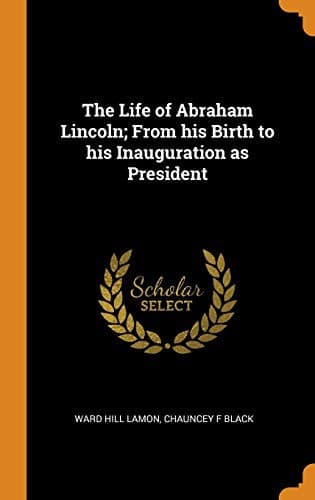
The Life of Abraham Lincoln, from His Birth to His Inauguration as PresidentLamon, Ward Hill
History
The Life of Abraham Lincoln, from His Birth to His Inauguration as President
Lamon, Ward Hill
Lincoln, Abraham, 1809-1865
But there is as much doubt of Cass on improvements as there is of Taylor
on the proviso. I have no doubt myself of Gen. Cass on this question,
but I know the Democrats differ among themselves as to his position. My
internal-improvement colleague (Mr. Wentworth) stated on this floor the
other day, that he was satisfied Cass was for improvements, because he
had voted for all the bills that he (Mr. W.) had. So far, so good.
But Mr. Polk vetoed some of these very bills; the Baltimore Convention
passed a set of resolutions, among other things, approving these vetoes;
and Cass declares, in his letter accepting the nomination, that he has
carefully read these resolutions, and that he adheres to them as firmly
as he approves them cordially. In other words, Gen. Cass voted for the
bills, and thinks the President did right to veto them; and his friends
here are amiable enough to consider him as being on one side or the
other, just as one or the other may correspond with their own respective
inclinations. My colleague admits that the platform declares against the
constitutionality of a general system of improvement, and that Gen. Cass
indorses the platform; but he still thinks Gen. Cass is in favor of some
sort of improvements. Well, what are they? As he is against _general_
objects, those he is for must be particular and local. Now, this
is taking the subject precisely by the wrong end.
_Particularity_--expending the money of the _whole_ people for an
object which will benefit only a _portion_ of them--is the greatest real
objection to improvements, and has been so held by Gen. Jackson, Mr.
Polk, and all others, I believe, till now. But now, behold, the objects
most general, nearest free from this objection, are to be rejected,
while those most liable to it are to be embraced. To return: I cannot
help believing that Gen. Cass, when he wrote his letter of acceptance,
well understood he was to be claimed by the advocates of both sides
of this question, and that he then closed the door against all further
expressions of opinion, purposely to retain the benefits of that double
position. His subsequent equivocation at Cleveland, to my mind, proves
such to have been the case.
Public-domain text, read in full here on John Shaqi.
Reviews
Reviews
No reviews yet
Be the first to share your thoughts on this work.
Elsewhere in the archive
Join the Discussion
Join the discussion
Sign in to leave a comment or review.
Sign InorCreate an account