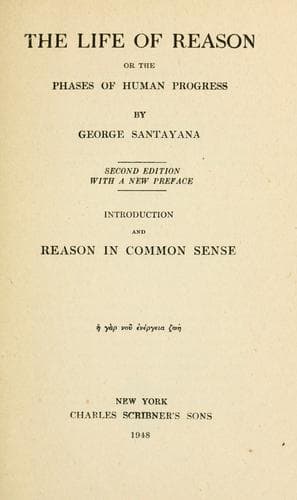
The Life of Reason: The Phases of Human ProgressSantayana, George
Philosophy
The Life of Reason: The Phases of Human Progress
Santayana, George
Philosophy
The necessity of backing personal attachment with ideal interests is
what makes true friendship so rare. It is found chiefly in youth, for
youth best unites the two requisite conditions—affectionate comradeship
and ardour in pursuing such liberal aims as may be pursued in common.
Life in camp or college is favourable to friendship, for there generous
activities are carried on in unison and yet leave leisure for playful
expansion and opportunity for a choice in friends. The ancients, so long
as they were free, spent their whole life in forum and palæstra, camp,
theatre, and temple, and in consequence could live by friendship even in
their maturer years; but modern life is unfavourable to its continuance.
What with business cares, with political bonds remote and invisible,
with the prior claims of family, and with individualities both of mind
and habit growing daily more erratic, early friends find themselves very
soon parted by unbridgeable chasms. For friendship to flourish personal
life would have to become more public and social life more simple and
humane.
[Sidenote: Friendship between man and wife.]
The tie that in contemporary society most nearly resembles the ancient
ideal of friendship is a well-assorted marriage. In spite of
intellectual disparity and of divergence in occupation, man and wife are
bound together by a common dwelling, common friends, common affection
for children, and, what is of great importance, common financial
interests. These bonds often suffice for substantial and lasting
unanimity, even when no ideal passion preceded; so that what is called a
marriage of reason, if it is truly reasonable, may give a fair promise
of happiness, since a normal married life can produce the sympathies it
requires.
[Sidenote: Between master and disciple.]
Public-domain text, read in full here on John Shaqi.
Reviews
Reviews
No reviews yet
Be the first to share your thoughts on this work.
Elsewhere in the archive
Join the Discussion
Join the discussion
Sign in to leave a comment or review.
Sign InorCreate an account