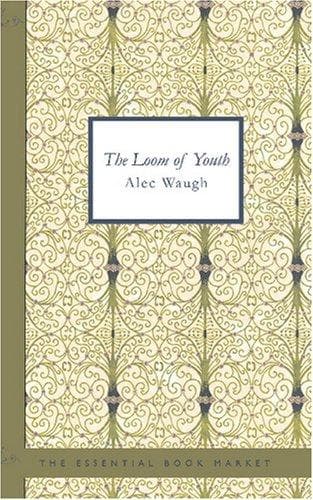
That was at the end of the August. Three weeks later the schools went
back and half the housemasters in the country found their desks littered
with letters from anxious parents demanding an assurance that their
Bobbie was not subject to the temptations described in this alarming
book. In self-defence the schoolmasters hit back and by mid-November the
book had become the centre of violent controversy. In many schools the
book was banned and several boys were caned for reading it. Canon Edward
Lyttleton, the ex-headmaster of Eton, wrote a ten-page article in _The
Contemporary_--then an influential monthly--explaining how biased and
partial a picture the school gave. _The Spectator_ ran for ten weeks and
_The Nation_ for six a correspondence filling three or four pages an
issue in which schoolmaster after schoolmaster asserted that whatever
might be true of "Fernhurst", at his school it was all very different.
Grant Richards adeptly fanned the conflagration. He had initiated that
summer an original style of advertising. He inserted each week in the
_Times Literary Supplement_ a half column of gossip about his books and
authors. It was set in small heavy black type, and caught the eye.
Richards was a good writer and it was very readable. He was, I think,
the first publisher to exploit the publicity value of unfavourable
comment. Richard Hughes, at that time in the sixth form at Charterhouse,
wrote, as his weekly essay, an attack on _The Loom of Youth_. His form
master, Dames Longworth, a fine old Tory, sent it up to _The Spectator_,
as a counterblast to such "pernicious stuff". Next week Grant Richards
quoted him. Mr Dames Longworth called the book "pernicious stuff", but
Clement Shorter prophesied in _The Sphere_ that it would prove "the
Uncle Tom's Cabin of the Public School system". By Christmas the book
was a best seller.
A modern reader will wonder what all this fuss and indignation was
about. Two points are to be remembered. First that before World War I
Britain's imperial destiny was never questioned, and the Public School
system as a bulwark of Empire was held sacrosanct. Second that no book
before _The Loom of Youth_ had accepted as part of the fabric of School
life the inevitable emotional consequences of a monastic herding
together for eight months of the year of thirteen year old children and
eighteen year old adolescents. On that issue such a complete conspiracy
of silence had been maintained that when fathers were asked by their
wives, and schoolmasters by parents who had not themselves been at
public schools whether "such things really could take place", the only
defence was a grudging admission, "Perhaps in a bad house, in a bad
school, in a bad time."
Public-domain text, read in full here on John Shaqi.
Reviews
Reviews
No reviews yet
Be the first to share your thoughts on this work.
Join the Discussion
Join the discussion
Sign in to leave a comment or review.
Sign InorCreate an account