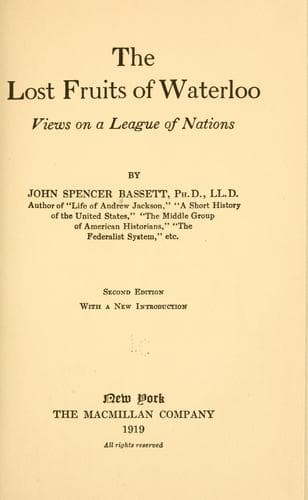
International cooperation; Peace; World War, 1914-1918
At this point in our inquiry into the subject of coöperation to secure
universal peace an inviting field of speculation opens before us, but
we must turn aside for the time, in order to consider various phases
of the process by which the world has arrived at the crisis now before
it. This chapter will serve its purpose if it gives the reader a view
of the earliest suggestions of systems of common action and if it makes
clear the differences between the two general plans that have been
formulated, the league and the federation.
CHAPTER III
PROBLEMS OF THE NAPOLEONIC WARS
The career of Napoleon, which has long commanded the greatest interest,
not to say enthusiasm, of students of history, aroused grave fears in
the minds of most of the thoughtful men of his day who did not live
in France. His design to conquer all his neighbors was most evident,
and his apparent ability to carry it into execution caused him to
be regarded as the embodiment of greed and insatiable ambition. Not
since the days of Louis XIV had Europe felt such thrills of danger and
horror. All its energy was called into play to withstand his attacks.
Wars followed wars in a series of campaigns that ended after many years
of extreme anxiety in his ruin, only when France had been worn out
by his repeated victories. When he began his wars he was at the head
of the best prepared nation in the world. He struck with sudden and
vigorous blows against nations that were not united, defeating one
after the other with startling effect. Their lack of preparation was
most marked and was probably the most effective cause of his initial
success. After years of conflict they learned how to oppose him. From
his own example they learned the value of organization and method in
fighting, and from their own disasters they at last acquired the sense
of union that was necessary to give him the final blow that made him
no longer a menace to their national integrity. It was not until 1815
that he was finally defeated and reduced to the state of ineffective
personal power from which he had risen.
Public-domain text, read in full here on John Shaqi.
Reviews
Reviews
No reviews yet
Be the first to share your thoughts on this work.
Join the Discussion
Join the discussion
Sign in to leave a comment or review.
Sign InorCreate an account