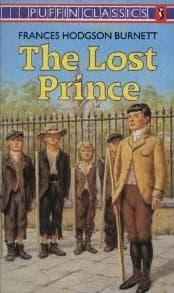
Fathers and sons -- Fiction; People with disabilities -- Fiction; Princes -- Fiction; Refugees -- Fiction
In not one of the many countries he knew had he ever met a boy whose
life was in the least like his own. Other boys had homes in which they
spent year after year; they went to school regularly, and played with
other boys, and talked openly of the things which happened to them, and
the journeys they made. When he remained in a place long enough to make
a few boy-friends, he knew he must never forget that his whole existence
was a sort of secret whose safety depended upon his own silence and
discretion.
This was because of the promises he had made to his father, and they
had been the first thing he remembered. Not that he had ever regretted
anything connected with his father. He threw his black head up as he
thought of that. None of the other boys had such a father, not one of
them. His father was his idol and his chief. He had scarcely ever seen
him when his clothes had not been poor and shabby, but he had also never
seen him when, despite his worn coat and frayed linen, he had not stood
out among all others as more distinguished than the most noticeable of
them. When he walked down a street, people turned to look at him even
oftener than they turned to look at Marco, and the boy felt as if it was
not merely because he was a big man with a handsome, dark face, but
because he looked, somehow, as if he had been born to command armies,
and as if no one would think of disobeying him. Yet Marco had never
seen him command any one, and they had always been poor, and shabbily
dressed, and often enough ill-fed. But whether they were in one country
or another, and whatsoever dark place they seemed to be hiding in, the
few people they saw treated him with a sort of deference, and nearly
always stood when they were in his presence, unless he bade them sit
down.
"It is because they know he is a patriot, and patriots are respected,"
the boy had told himself.
He himself wished to be a patriot, though he had never seen his own
country of Samavia. He knew it well, however. His father had talked to
him about it ever since that day when he had made the promises. He had
taught him to know it by helping him to study curious detailed maps of
it--maps of its cities, maps of its mountains, maps of its roads. He had
told him stories of the wrongs done its people, of their sufferings and
struggles for liberty, and, above all, of their unconquerable courage.
When they talked together of its history, Marco's boy-blood burned and
leaped in his veins, and he always knew, by the look in his father's
eyes, that his blood burned also. His countrymen had been killed, they
had been robbed, they had died by thousands of cruelties and starvation,
but their souls had never been conquered, and, through all the years
during which more powerful nations crushed and enslaved them, they never
ceased to struggle to free themselves and stand unfettered as Samavians
had stood centuries before.
Public-domain text, read in full here on John Shaqi.
Reviews
Reviews
No reviews yet
Be the first to share your thoughts on this work.
Join the Discussion
Join the discussion
Sign in to leave a comment or review.
Sign InorCreate an account