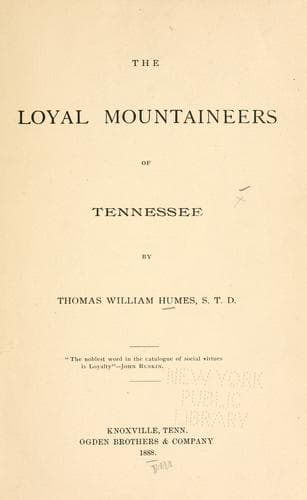
The loyal mountaineers of TennesseeHumes, Thomas William
Philosophy
The loyal mountaineers of Tennessee
Humes, Thomas William
Tennessee, East -- History -- Civil War, 1861-1865
Slavery, even in the modified, domestic garb it wore among them, had
a depressing, degrading influence upon the white common laborers.
This was more obviously so with the several thousands of inert,
improvident people, such as are to be found more or less in all
regions, but who are apt to be more numerous where the climate is
genial and a few acres of land with a poor tenement can be cheaply
rented. These led an Arab sort of life, living in a log cabin and
growing a crop of corn, then, not “folding their tents,” but packing
up their “plunder”--the synonym for household goods--and flitting
away with their children and dogs to a cabin of another proprietor.
For this class, who lived “from hand to mouth,” and whose contentment
was partly due to the fact that their covetousness had no incitements
to indulgence, the negroes of substantial families had an unconcealed
contempt. Another and better class consisted more numerously of
diligent and thrifty farming people. In them slavery induced, by some
subtle, indefinable influence, an industrial languor. It approximated
them to the slaves, despite their difference in color and personal
relation to the masters; and it barred their way to improvement of
condition, by pushing them as tenants from the more fertile acres
which the slaves tilled, to the thin soil of the hillsides. Now,
under the reign of freedom, these small but industrious farmers have
access by lease to the richer lands.
The mountaineers, strictly speaking, felt no concern about the
institution of slavery itself, and knew but little. Here and there
among them were men of competent means, some of whom owned a few
negroes. Generally they looked upon slavery as something foreign
to their social life, but they had no imperative, philanthropic
impulses to contend against it. They would have been displeased at
its coming near their homes in the imperious majesty it wore in the
cotton States. At the same time they were satisfied to let men of
the South keep serfs at pleasure, but they counted it no business of
theirs to help in the work. If the perpetuity of the Union or that of
slavery were the question at issue, they would have no hesitation in
deciding. Let slavery perish and the Union live. Yes! the Union--the
Government handed down to them from Washington and his compatriots!
_It_ must survive. For it they would fight, and, if necessary, die.
Public-domain text, read in full here on John Shaqi.
Reviews
Reviews
No reviews yet
Be the first to share your thoughts on this work.
Join the Discussion
Join the discussion
Sign in to leave a comment or review.
Sign InorCreate an account