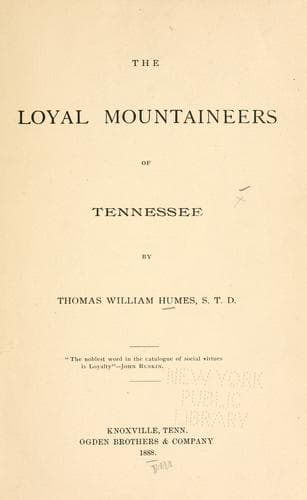
The loyal mountaineers of TennesseeHumes, Thomas William
Philosophy
The loyal mountaineers of Tennessee
Humes, Thomas William
Tennessee, East -- History -- Civil War, 1861-1865
Besides the more than thirty thousand men who were absentees
northward--nearly all of whom had enlisted in the Federal army--and
the unknown number who had been sent to the Southern prisons, some
thousands were in the Confederate army. So that probably more than
one-eighth of the entire population were withdrawn from all peaceful
labor and chiefly from tilling the soil. As long before as 1861 and
’62, the earth had very scantily yielded its fruits, because little
work had been done in cultivating it. Even that little had been
performed in the midst of excitements, agitations and disturbances,
and was therefore defective in quality. Many Confederate soldiers had
been quartered here and there throughout East Tennessee, or were in
active movement over it from point to point. They had to be fed, and
being imperfectly disciplined, they wasted much even of that they
bought of their friends, and still more of that they took from Union
people. The provisions and provender they ruthlessly seized, might
be transported by them elsewhere or be wantonly destroyed on the
spot. In the proclamation by Kirby Smith, April, 1862, was a clause
following the invitation to Union refugees, which testifies of his
good intentions to correct disorders committed by his own troops.
In doing this, it bears witness also to their wrong doings and the
need there was of protection from them being assured to all citizens.
He said: “The Major General commanding, furthermore declares his
determination henceforth to employ all the elements at his disposal
for the protection of the lives and property of the citizens of
East Tennessee, whether from the incursions of the enemy, or the
irregularities of his own troops.”
The depleting causes continued during the year 1863. One who had
good opportunity to be informed on the subject says, that in the
summer of that year; “East Tennessee was full of parties marching and
countermarching, skirmishing and battling, ravaging and devastating
the whole country, which was far distant from reliable bases of
supply. The young laboring men were in the armies; and what was
left of the people’s substance being wasted, the prevailing want
pressed upon the brink of starvation and was brought to the homes
of thousands who had never known hunger before. The present and
prospective victims of the extreme destitution were women and
children, old men and invalids.” When autumn came, to be followed
by winter, the outlook was ominous and distressing. Was there any
way possible of mitigating the growing calamity? If so, how and from
whence could help be had?
Public-domain text, read in full here on John Shaqi.
Reviews
Reviews
No reviews yet
Be the first to share your thoughts on this work.
Elsewhere in the archive
Join the Discussion
Join the discussion
Sign in to leave a comment or review.
Sign InorCreate an account