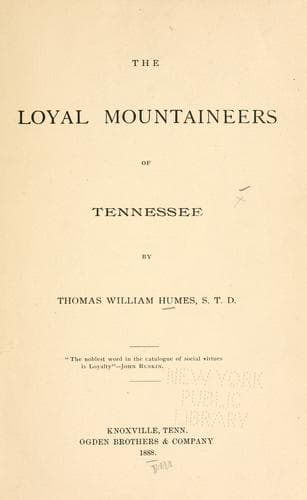
The loyal mountaineers of TennesseeHumes, Thomas William
Philosophy
The loyal mountaineers of Tennessee
Humes, Thomas William
Tennessee, East -- History -- Civil War, 1861-1865
Third, as the benefit of the poor and needy was the controlling
purpose of the Association in all its deliberations and transactions,
that supreme end was practically reached in the use of the fund
originally contributed. The articles of food purchased and
distributed were judiciously chosen, and the wearing apparel, in
buying which fifty thousand dollars were expended, was suited to the
wants of the people.[62]
Altogether, there was much cause for congratulation among the friends
of the undertaking both at home and abroad, that at a period of
time when because of civil war, vast sums of money were lavishly
expended and temptations to mis-use of them were strong, more than
one hundred and sixty thousand dollars should have been managed with
such prudence and efficiency and with such strict integrity, for
the relief of the suffering people of East Tennessee. The generous
givers and the thankful beneficiaries were far away from each other
in space. A deep gulf of deadly strife intervened between them;
but across that gulf, their hearts went forth and were clasped
together--the prosperous and the comfortless,--in love for the
American Union, and in brotherly love as fellow-countrymen.
“Those friends thou hast and their adoption tried,
Grapple them to thy soul with hooks of steel.”
Sincere human friendships by no means perish with the loss of their
mortal surroundings. To a pure mind, inspired by the truth, they are
spiritually related to the invisible and permanent. Else, hopelessly
we should often have to cry--
“For the touch of a vanished hand,
And the sound of a voice that’s still.”
Just so with human citizenship, wisely conceived and cherished. It
is more than a mere symbol of one higher and nobler. As one has well
said:
“There is a mystery in all affections which rises above vulgar
instincts; it is thus with the love of country. The patriot sees
in her more than can be seen by those who are without; and yet he
remembers that there remains in her much that cannot meet his eye;
for it is part of the greatness of a nation, that though her fields
and cities are visible things, her highest greatness and most sacred
claims belong in part, like whatever includes a spiritual element, to
the sphere of ‘things unseen.’”[63]
The archetype of _our country_ is the “better country, that is,
an heavenly,” for which prophetic souls--children of faith and
promise--have yearned throughout all the centuries. A man dwelling
here, may have there his citizenship, and in its fulfillment is
required and insured the performance of all other civic duty.
APPENDICES.
CONTENTS.
Public-domain text, read in full here on John Shaqi.
Reviews
Reviews
No reviews yet
Be the first to share your thoughts on this work.
Elsewhere in the archive
Join the Discussion
Join the discussion
Sign in to leave a comment or review.
Sign InorCreate an account