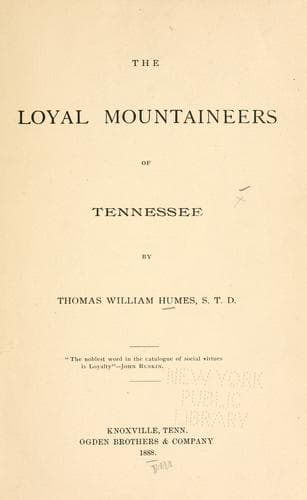
The loyal mountaineers of TennesseeHumes, Thomas William
Philosophy
The loyal mountaineers of Tennessee
Humes, Thomas William
Tennessee, East -- History -- Civil War, 1861-1865
To this communication Governor Martin replied courteously but
firmly, and at length. He argued the fallacy or insufficiency of
the reasons given by the western people for their conduct. He
emphasized the facts, that the sovereignty of North Carolina over
the ceded territory had been reserved until Congress should accept
the gift, and that the Legislature had subsequently repealed the
Act of cession. He affirmed that the good will of the State to the
disaffected counties, had been shown by its recent ample provision
for the regular administration of justice and the authoritative use
of the militia. He denied that goods to compensate the Indians for
their lands had been stopped by the State on the way and that in
consequence murders had been committed by the savages. The goods, he
averred, had only been delayed, that should the cession be accepted
by Congress, they might go under its regulations. With some eloquence
of words he exhorted all loyal citizens of the western counties to
be firm in their adherence to the State he represented, and warned
all persons concerned in the revolt who “had probably been seduced
from their just allegiance by ambitious and designing men,” to refuse
obedience any longer to “the self-created power and authority
unknown to the Constitution of the State and unsanctioned by the
Legislature.” The lessons which history teaches concerning needless
revolutions were referred to by him, and the reflection advised that
“there is a national pride in all kingdoms and states which inspires
every citizen and subject with importance--the grand cement and
support of government which must not be insulted.” That insult he
felt had been inflicted by the western counties; “the honor of the
State had been especially wounded” in their “premature seizure by
violence of that independence which in time no doubt would have been
granted by consent.” And he besought them “not to tarnish the laurels
they had won at King’s Mountain in supporting the independence of the
United States, by supporting a black and traitorous revolt.”
The circulation of this document strengthened the wills of the
friends of North Carolina and increased their number among the
western people, but the majority in the new State were unmoved from
their previous purpose, and the work of governmental organization
went forward. Courts and Magistrates were appointed and new counties
formed. Salaries were allotted to State officials, to be paid in
current money of Frankland, (six shillings to the dollar) or in
specified articles received from the people in payment of taxes and
at like rates of value. These miscellaneous articles included “flax
and tow linen, woolen and cotton linsey, beaver, otter, raccoon, fox
and deer skins, bacon, tallow and bees-wax, rye whisky, peach and
apple brandy, home-made sugar and good tobacco.”
Public-domain text, read in full here on John Shaqi.
Reviews
Reviews
No reviews yet
Be the first to share your thoughts on this work.
Join the Discussion
Join the discussion
Sign in to leave a comment or review.
Sign InorCreate an account