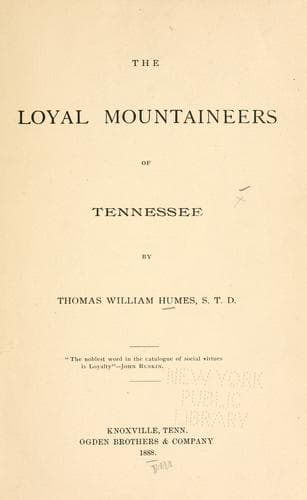
The loyal mountaineers of TennesseeHumes, Thomas William
Philosophy
The loyal mountaineers of Tennessee
Humes, Thomas William
Tennessee, East -- History -- Civil War, 1861-1865
The Alabamian’s friends seemed to be jubilant over the victory they
claimed to have won in the wordy encounter. The other party were less
demonstrative but more determined than before, and were moved to
various degrees of wrath by the disunion sentiments to which they had
listened. Some, while stirred to indignation by the sentiments, which
they considered atrocious, and at the speaker’s audacity in uttering
them, had yet a feeling of regret that their own champions were
put on the platform at disadvantage; had been subjected in turn to
questioning by their adversary, as witnesses might be in court by an
adroit attorney; and were compelled to relative silence, while he, on
the point at issue, fully delivered his mind with an air of triumph
to the exhilaration of his friends.
When the result of the Presidential election was known, the political
excitement greatly increased. There had been no electoral ticket in
Tennessee for the Republican candidates: and had any citizen of the
State openly advocated Mr. Lincoln’s election, he would have had to
suffer indignity and injury, or to flee from his home. The general
public sentiment was hostile to the Republican party and at the same
time friendly to the continuance of slavery where it existed, without
interference from abroad. As between secession and the preservation
of the Union, opinions differed both in kind and degree of strength.
A single incident will illustrate the situation:
A citizen of Ohio, selling fruit-tree scions arrived at Knoxville
from Asheville, North Carolina. He was closely followed by the
newspaper of that village, fixing strong suspicion upon him from
slight evidence, as a peregrinating Abolitionist with a sinister
purpose. Meanwhile he with his chattels personal, had found temporary
lodgment on the Deaf and Dumb Asylum grounds. Some medical students
at Philadelphia from Mississippi and Alabama, influenced by political
fervor, when the work of secession began, incontinently abandoned
their professional studies, and departed homewards. Arriving at
Knoxville on their way, and hearing of the alleged anti-slavery
Ohioan, they went without delay and demanded his expulsion from the
community. But because of the Asylum’s Principal, they failed in
their errand, and as rumor told, were humorously rebuked by him for
their impertinent wrath and intolerance.
Public-domain text, read in full here on John Shaqi.
Reviews
Reviews
No reviews yet
Be the first to share your thoughts on this work.
Join the Discussion
Join the discussion
Sign in to leave a comment or review.
Sign InorCreate an account