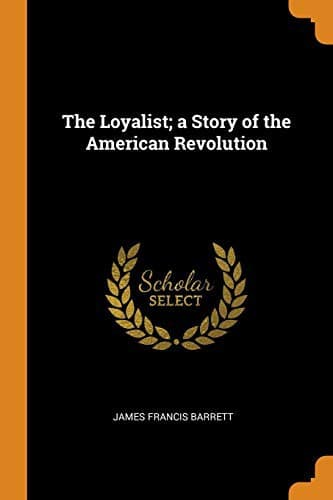
The Loyalist: A Story of the American Revolution — John Shaqi
The Loyalist: A Story of the American RevolutionBarrett, James Francis
History
The Loyalist: A Story of the American Revolution
Barrett, James Francis
United States -- History -- Revolution, 1775-1783 -- Fiction
Arriving in Canada, it soon became evident to the committee, that their
mission was to be unproductive of results. The government did not take
kindly to them, nor would the Bishop of Quebec and his clergy trust the
vague expressions of the United Colonies, whose statute books, they
pointed out, still bore the most bitter and unchristian sentiments
against all priests and adherents of the ancient church. Bigotry had
apparently defeated their purpose. How it had done this was still quite
obscure, until it was discovered that the British Government had taken
John Jay's address, translated it into French and spread it broadcast
throughout Canada. "Behold the spirit of the Colonists," it went on to
remind the people, "and if you join forces with them, they will turn on
you and extirpate your religion, in the same manner as they did in the
Catholic colony of Maryland."
The effect is historical. The commissioners were compelled to return;
the brave Montgomery was killed before the walls of the city; Canada was
lost to the Colonies and forever forfeited as an integral part of the
United States; all of which was due to the narrowness and intolerance of
those who in the supreme hour could not refrain from the fanaticism of
bigotry.
It must be said, however, out of justice to the colonists that they did
not persist in their spirit of antagonism towards the Catholics. The
commencement of the struggle against the common foe, together with the
sympathetic and magnanimous concurrence of the Catholics with the
patriots in all things, soon changed their prejudice in favor of a more
united and vigorous effort in behalf of their joint claims. The despised
Papists now became ardent and impetuous patriots. The leaders in the
great struggle soon began to reflect an added luster to the nation that
gave them birth and to the Church which taught them devotion to their
land. The rank and file began to swarm with men of the Catholic faith,
so many, indeed, that their great Archbishop, John Carroll, could write
of them that "their blood flowed as freely (in proportion to their
numbers) to cement the fabric of independence, as that of any of their
fellow citizens. They concurred with perhaps greater unanimity than any
other body of men in recommending and promoting that government from
whose influence America anticipates all the blessings of justice, peace,
plenty, good order, and civil and religious liberty."
Only among the few was the spirit of intolerance still rampant, and
among these might be numbered Colonel Forrest.
III
"See now who's t' blame, don't ye? The likes o' ye an' that poltroon,
Jay, up there in New York. See who started this affair, don't ye?"
"That's what you say. Egad, I could say all that an' save half the
breath. I've got my 'pinion, though, and that'll do fur me."
"Ye're so narrow, Forrest, ye've only one side."
"Is that so? Well, so is the Governor."
"Is that his opinion, too?" impatiently asked Mr. Allison.
"What?"
Public-domain text, read in full here on John Shaqi.
Reviews
Reviews
No reviews yet
Be the first to share your thoughts on this work.
Join the Discussion
Join the discussion
Sign in to leave a comment or review.
Sign InorCreate an account