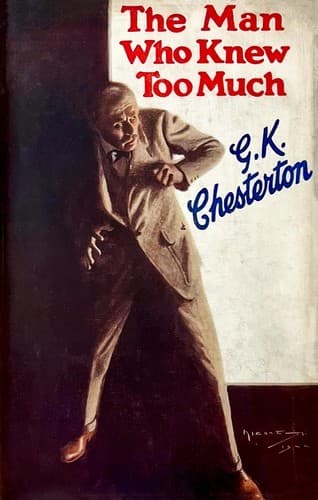
The Man Who Knew Too MuchChesterton, G. K. (Gilbert Keith)
ReligionComparative
The Man Who Knew Too Much
Chesterton, G. K. (Gilbert Keith)
Aristocracy (Social class) -- Fiction; Detective and mystery stories, English; Great Britain -- Fiction
March followed him to the bar parlor with some wonder, and his dim
sense of repugnance was not dismissed by the first sight of the
innkeeper, who was widely different from the genial innkeepers of
romance, a bony man, very silent behind a black mustache, but with
black, restless eyes. Taciturn as he was, the investigator succeeded
at last in extracting a scrap of information from him, by dint of
ordering beer and talking to him persistently and minutely on the
subject of motor cars. He evidently regarded the innkeeper as in
some singular way an authority on motor cars; as being deep in the
secrets of the mechanism, management, and mismanagement of motor
cars; holding the man all the time with a glittering eye like the
Ancient Mariner. Out of all this rather mysterious conversation
there did emerge at last a sort of admission that one particular
motor car, of a given description, had stopped before the inn about
an hour before, and that an elderly man had alighted, requiring some
mechanical assistance. Asked if the visitor required any other
assistance, the innkeeper said shortly that the old gentleman had
filled his flask and taken a packet of sandwiches. And with these
words the somewhat inhospitable host had walked hastily out of the
bar, and they heard him banging doors in the dark interior.
Fisher's weary eye wandered round the dusty and dreary inn parlor
and rested dreamily on a glass case containing a stuffed bird, with
a gun hung on hooks above it, which seemed to be its only ornament.
"Puggy was a humorist," he observed, "at least in his own rather
grim style. But it seems rather too grim a joke for a man to buy a
packet of sandwiches when he is just going to commit suicide."
"If you come to that," answered March, "it isn't very usual for a
man to buy a packet of sandwiches when he's just outside the door of
a grand house he's going to stop at."
"No . . . no," repeated Fisher, almost mechanically; and then
suddenly cocked his eye at his interlocutor with a much livelier
expression.
"By Jove! that's an idea. You're perfectly right. And that suggests
a very queer idea, doesn't it?"
There was a silence, and then March started with irrational
nervousness as the door of the inn was flung open and another man
walked rapidly to the counter. He had struck it with a coin and
called out for brandy before he saw the other two guests, who were
sitting at a bare wooden table under the window. When he turned
about with a rather wild stare, March had yet another unexpected
emotion, for his guide hailed the man as Hoggs and introduced him as
Sir Howard Horne.
Public-domain text, read in full here on John Shaqi.
Reviews
Reviews
No reviews yet
Be the first to share your thoughts on this work.
Join the Discussion
Join the discussion
Sign in to leave a comment or review.
Sign InorCreate an account