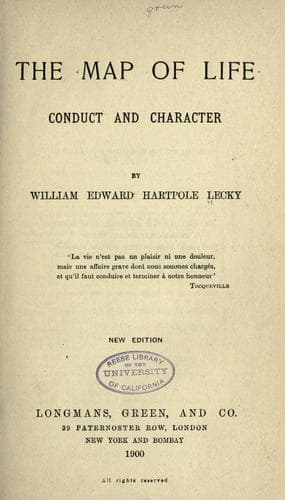
The Map of Life: Conduct and CharacterLecky, William Edward Hartpole
Philosophy
The Map of Life: Conduct and Character
Lecky, William Edward Hartpole
Character; Conduct of life
This is one side of the picture. On the other hand it cannot be
questioned that the strong convictions and impressive ceremonies, even
of the most superstitious faith, have consoled and strengthened
multitudes in their last moments, and in the purer and more enlightened
forms of Christianity death now wears a very different aspect from what
it did in the teaching of mediæval Catholicism, or of some of the sects
that grew out of the Reformation. Human life ending in the weakness of
old age and in the corruption of the tomb will always seem a humiliating
anti-climax, and often a hideous injustice. The belief in the rightful
supremacy of conscience, and in an eternal moral law redressing the many
wrongs and injustices of life, and securing the ultimate triumph of good
over evil; the incapacity of earth and earthly things to satisfy our
cravings and ideals; the instinctive revolt of human nature against the
idea of annihilation, and its capacity for affections and attachments,
which seem by their intensity to transcend the limits of earth and carry
with them in moments of bereavement a persuasion or conviction of
something that endures beyond the grave,--all these things have found in
Christian beliefs a sanction and a satisfaction that men had failed to
find in Socrates or Cicero, or in the vague Pantheism to which
unassisted reason naturally inclines.
Looking, however, on death in its purely human aspects, the mourner
should consider how often in a long illness he wished the dying man
could sleep; how consoling to his mind was the thought of every hour of
peaceful rest; of every hour in which the patient was withdrawn from
consciousness, insensible to suffering, removed for a time from the
miseries of a dying life. He should ask himself whether these intervals
of insensibility were not on the whole the happiest in the
illness--those which he would most have wished to multiply or to
prolong. He should accustom himself, then, to think of death as
sleep--undisturbed sleep--the only sleep from which man never wakes to
pain.
Public-domain text, read in full here on John Shaqi.
Reviews
Reviews
No reviews yet
Be the first to share your thoughts on this work.
Elsewhere in the archive
Join the Discussion
Join the discussion
Sign in to leave a comment or review.
Sign InorCreate an account