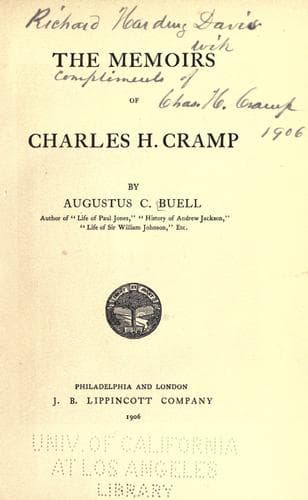
Cramp, Charles Henry, 1828-1913; Naval architects -- United States -- Biography
The Americans were determined to own and operate ships. They would have
preferred to run them under the American flag, but Congress—or rather a
fraction in the House of Representatives—compelled them to use the
British ensign! The commercial and financial effect of this was that the
American investors got the benefit of the lower wages and cheaper
subsistence of foreign seafaring labor. The vessels were American as to
ownership only. No American officer or seaman or engineer or fireman was
employed in them. They added nothing to the sea power of the country;
they did nothing toward forming a nursery of American sailors to be in
readiness for an emergency. On the contrary, they were a constant school
for the Naval Reserve of a power that might become as hostile
politically as she has been industrially and commercially from the
beginning of our existence as an independent nation. None of these great
facts appealed to the narrow and demagogic faction in the House. They
could see in it nothing but “a trust,” and their parrot-cry resounded
from the banks of the Wabash to the foot-hills of the Rocky Mountains.
Many men, hitherto hopeful, believe that any further effort to restore
our foreign carrying trade under the American flag must be in vain. They
argue that, if the Houses of Representatives elected in 1898 and 1900
would not pass a Shipping Bill, none can ever be chosen that will. If
foreign influences and alien doctrines could prevent consideration in
those two Houses of bills that had already passed the Senate in each
Congress, those influences and those doctrines are likely to maintain
their potency indefinitely. If this be true, the American flag in the
foreign trade is doomed to utter extinction within a few years on the
Atlantic Ocean, and its survival in the Pacific is a matter of extreme
doubt.
A strange feature of this contest in its later stages was the fact that
the confederated trades-unions of the country arranged themselves
unanimously against the American and in favor of the alien policy.
Trades-unionism is founded upon a doctrine or dogma of protection more
sweeping and more drastic than any other ever known. They cheerfully
maintain and sometimes exultantly proclaim that, when nothing else will
serve to accomplish their ends, violence and crime become logical and
legitimate instrumentalities for enforcement of their protective
doctrine. They take no account of the fact that the enactment of a
favorable shipping law would open new and wide avenues of remunerative
employment for American mechanics that are now closed. Their motive in
opposing such legislation seems to be a sort of blind, groping revenge
against a few ship-builders and ship-owners who have resisted their
unreasonable and ruinous demands. It is a remarkable fact that the
leaders and managers of the confederated trades-unions are all
foreigners.
Public-domain text, read in full here on John Shaqi.
Reviews
Reviews
No reviews yet
Be the first to share your thoughts on this work.
Elsewhere in the archive
Join the Discussion
Join the discussion
Sign in to leave a comment or review.
Sign InorCreate an account